
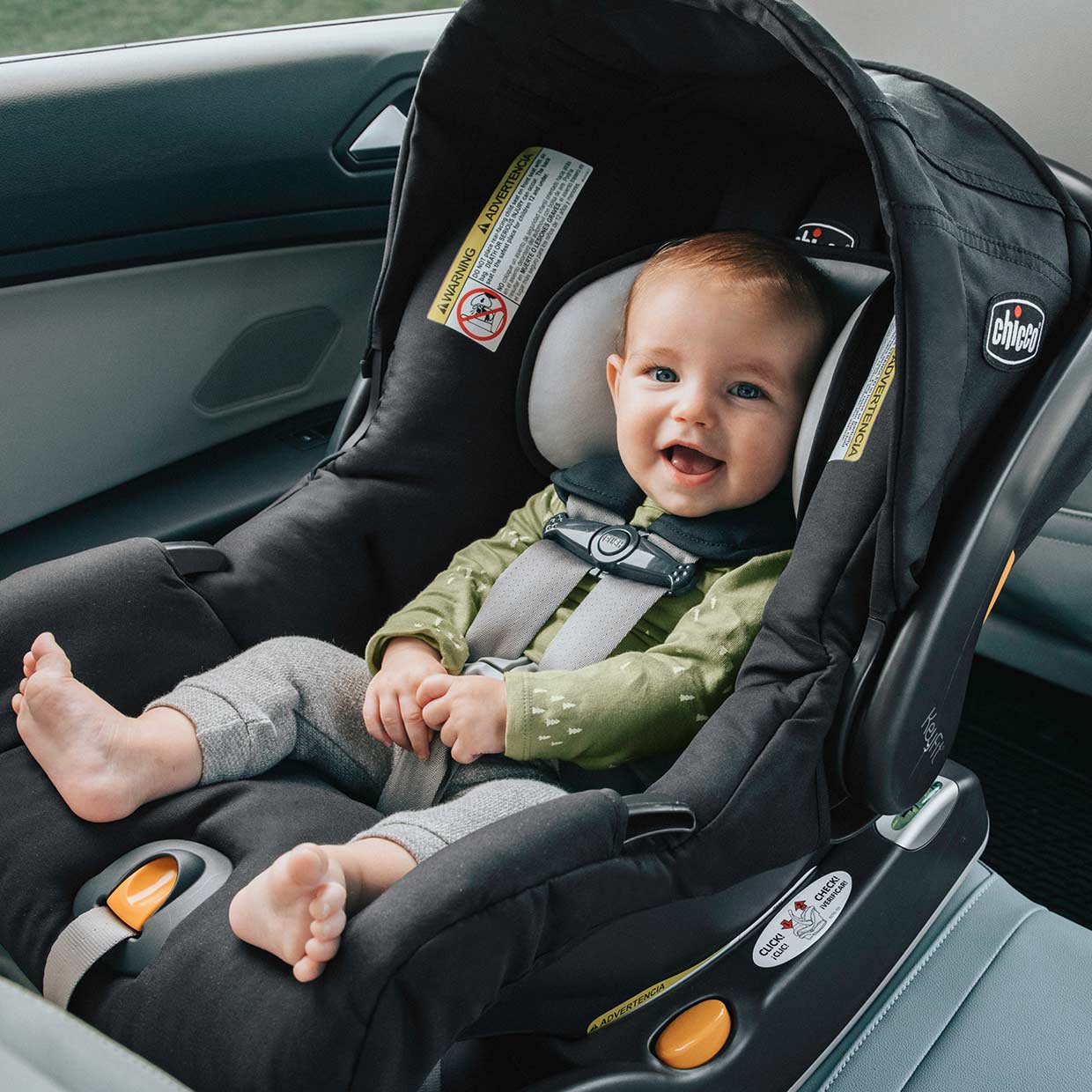
An infant car seat is a rear-facing child restraint made for babies and young infants. In the United States, it usually has a detachable carrier that clicks into a fixed base in the vehicle. Some models can also be installed without the base.
An infant car seat holds a baby in a built-in harness and helps protect the child during a crash. It is different from a convertible car seat because most infant seats are designed to face the rear only and are often made to carry a baby outside the car.
The safest choice depends on the child’s size, the seat’s limits, the vehicle, and correct installation. Always follow the car seat manual, vehicle manual, and current guidance from the National Highway Traffic Safety Administration (NHTSA) and the American Academy of Pediatrics (AAP).

How Does an Infant Car Seat Work?
An infant car seat supports a baby in a semi-reclined, rear-facing position. The seat shell spreads crash forces across a strong structure, while the harness holds the child in place.
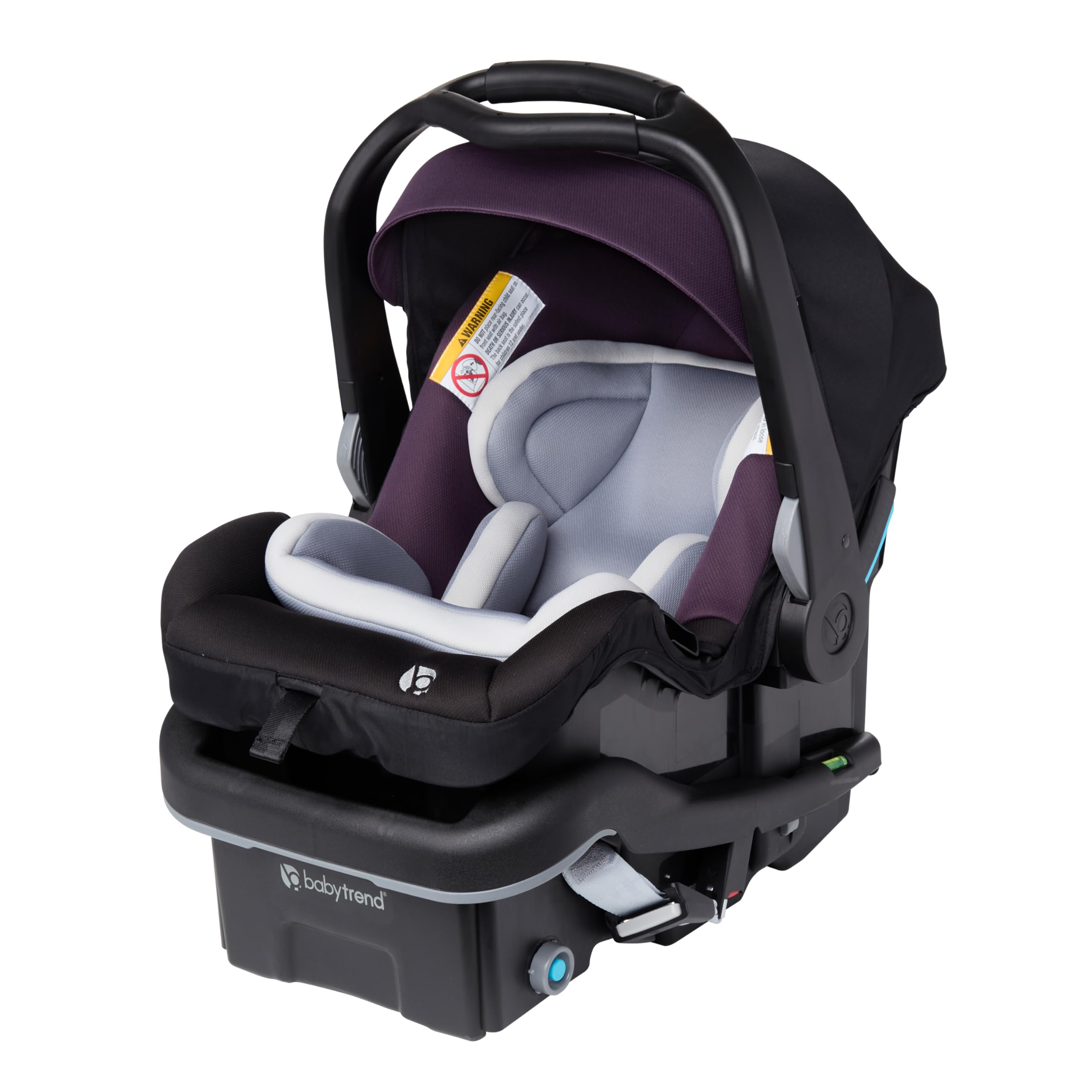
Most infant car seats have two main parts:
- Carrier: The part that holds the baby and can often be removed from the car.
- Base: The part that stays installed in the vehicle.
The carrier attaches to the base with built-in connectors. A release handle lets a parent remove the carrier without taking the baby out. This can be useful for short trips, but the carrier should not replace a safe sleep space.
Some infant car seats install directly with the vehicle seat belt. This option can help when traveling in a second car, taxi, or rental car. Read the specific manual because installation methods vary by model.
The five-point harness
An infant seat normally uses a five-point harness. It has:
- Two shoulder straps
- Two hip straps
- One buckle between the baby’s legs
The harness should lie flat and snug against the baby. Bulky coats, blankets, and thick clothing can leave space between the harness and the child’s body. Place blankets over the fastened harness instead.

What Age and Size Is an Infant Car Seat For?
Infant car seats are usually made for newborns and young babies. Many U.S. models have weight limits from about 4 to 35 pounds, but the exact limits differ by product. Some seats have different height limits, so parents must check both numbers.
A child should use an infant car seat only while the child fits within all limits listed by the manufacturer. The child has outgrown the seat when any one of these conditions applies:
- The child reaches the seat’s maximum weight.
- The child reaches the seat’s maximum standing height.
- The top of the child’s head is too close to the top of the shell, according to the manual.
- The child no longer fits the harness correctly.
- The manufacturer gives another specific outgrowth rule.
A baby does not outgrow a rear-facing seat simply because the baby’s feet touch the vehicle seat. Feet touching the seat back is common and is not, by itself, a safety problem.
Can a newborn use an infant car seat?
Yes. Many infant seats are designed for newborns. However, a newborn must fit the seat’s minimum weight and height requirements, and the harness must adjust correctly.
Premature or medically fragile babies may need special guidance before leaving the hospital. Ask the child’s doctor or hospital team about a car seat test if one is recommended. A standard car seat does not replace medical advice about a baby’s breathing or travel readiness.
When should a baby stop using an infant seat?
A baby should stop using the infant seat when the child reaches a stated size limit or when the seat no longer fits correctly. Many families then move to a rear-facing convertible car seat.
The AAP recommends that children ride rear-facing as long as possible, until they reach the highest height or weight allowed by the car seat manufacturer. A convertible seat can often keep a child rear-facing for longer than a typical infant carrier.

Infant Car Seat vs. Convertible Car Seat
Both seat types can protect a child when used correctly, but they serve different needs.
| Feature | Infant car seat | Convertible car seat |
|---|---|---|
| Direction | Usually rear-facing only | Rear-facing, then forward-facing |
| Carrier removal | Usually yes | Usually no |
| Newborn use | Often designed for newborns | Depends on model and fit |
| Long-term use | Usually shorter | Usually longer |
| Portability | Easy to carry | Stays in the vehicle |
| Base system | Common | Usually not a detachable carrier base |
| Best fit | Families who want a removable carrier | Families who want one seat to last longer |
An infant car seat may be convenient during the first months because the carrier can move between an installed base and a stroller. A convertible seat may cost less over time because it can serve through more stages.
Neither type is automatically safer merely because it costs more or has more features. Correct fit and correct installation matter more than convenience features.
Which one should you choose?
An infant seat may suit you if:
- You want to carry the baby in and out of the car.
- You plan to use a compatible stroller.
- More than one vehicle will use the same seat system.
- You prefer a smaller seat for a newborn.
A convertible seat may suit you if:
- You want to avoid buying another seat soon.
- You do not need to carry the seat.
- Your vehicle has limited space for a large carrier and base.
- You want to keep the child rear-facing beyond the infant seat’s limits.
A family can also use an infant seat first and then move to a convertible seat. That choice is common, but it is not required.

How to Install an Infant Car Seat Safely
Read both the car seat manual and vehicle owner’s manual before installation. The manuals explain approved seating positions, belt paths, lower-anchor use, recline settings, and any limits on center seating.
Step 1: Choose an approved seating position
Use a rear seating position whenever possible. Never place a rear-facing infant car seat in front of an active passenger air bag. A front air bag can cause severe injury or death to a child in a rear-facing seat.
The safest position is not always the center. A seat that fits tightly and allows correct harness use is safer than a center position that cannot be installed correctly.
Step 2: Select one approved installation method
In the United States, an infant seat may use:
- The vehicle seat belt
- Lower anchors, when allowed by the car seat and vehicle manuals
- A seat belt for the base, followed by the carrier attachment
Do not use lower anchors and the seat belt together unless both manuals specifically allow that method. Many seats do not permit combined use.
Step 3: Set the correct recline angle
Use the recline indicator on the base or seat. A newborn needs the correct angle to help keep the head from falling forward. A head that drops toward the chest can affect breathing.
Park on level ground when checking the indicator unless the manual gives another method. Use only approved adjustment methods. Do not place towels, pool noodles, or other items under the seat unless the manufacturer permits them.
Step 4: Tighten the installation
After securing the base or seat, hold it near the belt path and test for movement. NHTSA commonly advises checking for no more than 1 inch of movement from side to side or front to back at the belt path.
This check does not mean the entire car seat must feel completely motionless. Test the part near the belt path, not the carrier handle or top of the shell.
Step 5: Check the carrier connection
If the carrier uses a base, lower it into the base until it locks. Listen for the connection and pull up on the carrier as the manual directs.
Never rely only on a sound. Inspect the indicators and confirm that the carrier is fully attached.
Step 6: Secure the baby
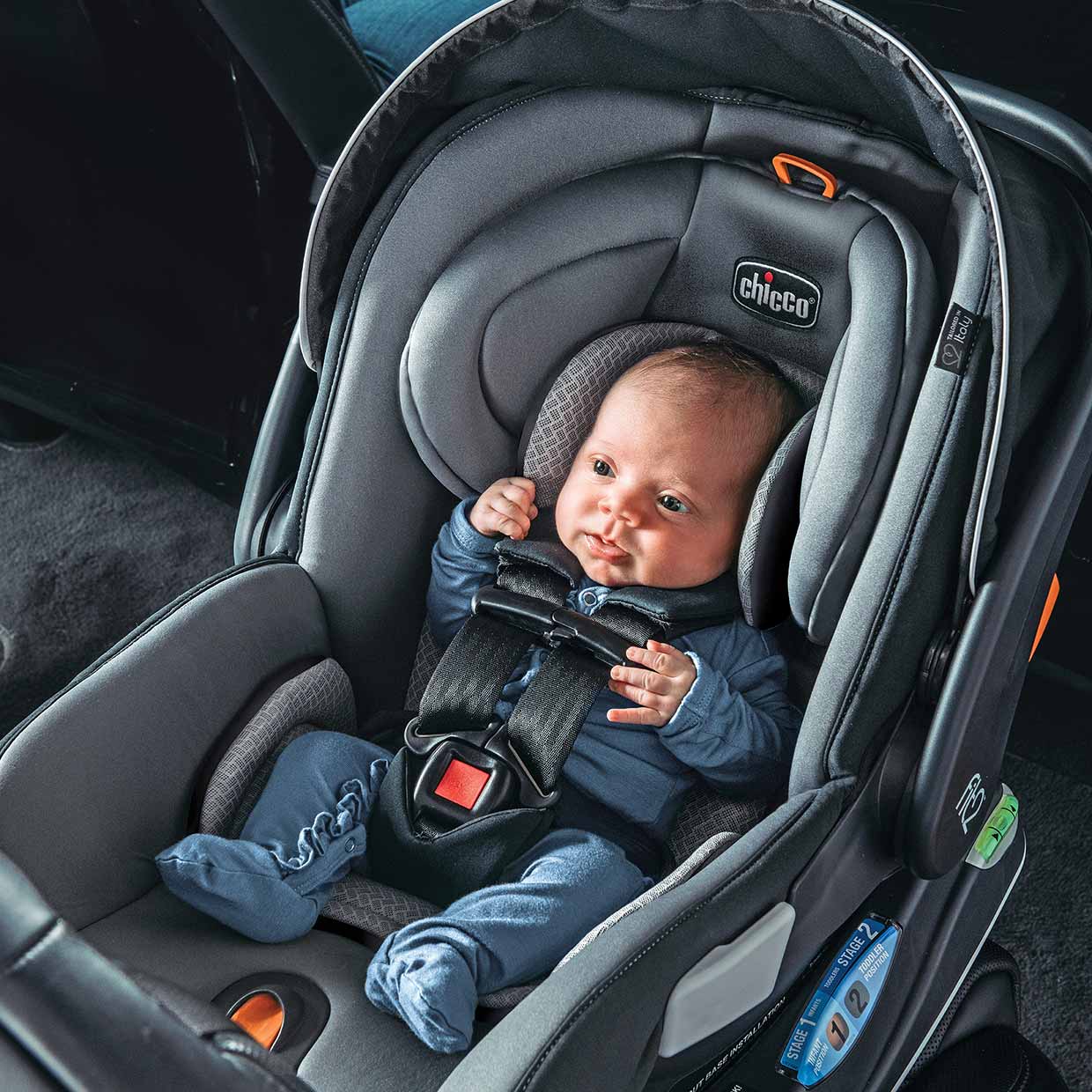
Place the baby’s back and bottom flat against the seat. The harness should be snug, with no slack at the shoulders. For a rear-facing infant, the harness straps usually come from at or below the shoulders, but always follow the seat manual.
The chest clip should sit at armpit level. It should not rest on the stomach or neck.
How Should a Baby Fit in an Infant Car Seat?
A proper fit helps the harness do its job during a sudden stop or crash. Check the fit each time, especially as the baby grows.
Use this checklist:
- The baby’s back and bottom rest flat against the seat.
- The harness straps lie flat and are not twisted.
- The harness is snug at the shoulders.
- The chest clip sits at armpit level.
- The buckle is fastened fully.
- The baby’s head stays within the seat’s approved position.
- The infant insert is used only as the manual permits.
- No thick coat or bulky blanket is under the harness.
To check snugness, pinch the harness webbing near the shoulder. If you can pinch extra material, tighten the harness. Do not pull on the chest clip as a substitute for tightening the harness.
Can a baby wear a winter coat in an infant car seat?
A baby should not wear a bulky coat under the harness. The coat can compress during a crash and create dangerous slack.
Instead, dress the baby in thin layers. Fasten the harness first, then place a blanket over the harness. Do not cover the baby’s face, and make sure the baby does not become too warm.
Should the handle stay up or down?
The correct handle position depends on the model. Some infant seats allow the handle to remain up while driving. Others require a different position.
Follow the manual rather than using a general rule. The handle position can affect how the seat performs in a crash.

Where Can You Use an Infant Car Seat?
An infant car seat is designed for use in a motor vehicle. It may also be used on an aircraft if it is approved for aircraft use and the airline accepts it.
Look for labeling that states the restraint is certified for use in motor vehicles and aircraft. The FAA advises using an approved child restraint system for children who need one during flight. A car seat must be installed in a forward-facing aircraft seat, not in an exit-row seat.
A car seat is not a safe place for routine sleep outside the vehicle. Once you arrive, move the baby to a firm, flat sleep surface such as a crib, bassinet, or play yard approved for sleep.
Avoid placing a sleeping baby in the car seat on a bed, couch, table, or other raised surface. A carrier can tip, and a baby’s head can fall into an unsafe position.
Can you use an infant car seat in a stroller?
You can use an infant carrier with a stroller only when the stroller and car seat are designed to work together. Some systems use a dedicated adapter, while others come as a matched travel system.
Check the instructions for:
- The exact car seat model
- The exact stroller model
- Any required adapter
- Weight limits
- Locking indicators
- Whether the carrier must be removed before folding the stroller
Do not place a car seat on a stroller frame unless the attachment is approved by the manufacturer.
What U.S. Safety Standards Apply to Infant Car Seats?
Infant car seats sold for use in the United States must meet federal motor vehicle safety requirements, including Federal Motor Vehicle Safety Standard No. 213, administered by the National Highway Traffic Safety Administration.
This standard sets performance and labeling requirements for child restraint systems. However, a federal compliance label does not mean every seat fits every child or every vehicle equally well. Correct use still depends on the child’s size, the vehicle, and the instructions.
Before buying or using a seat, check:
- The required minimum and maximum child weight.
- The maximum child height.
- The expiration or usable-life information.
- The date of manufacture.
- The recall status.
- Whether replacement parts are available.
- Whether the seat fits your vehicle.
- Whether the seat is approved for aircraft use, if needed.
Use NHTSA’s recall tools and the manufacturer’s website to check for recalls. Register the seat so the manufacturer can contact you about a recall or safety notice.
Do infant car seats expire?
Many manufacturers place an expiration date or usable-life period on the seat. The period differs by brand and model. It may be printed on the seat, base, label, or manual.
An expiration date can reflect aging materials, updated instructions, discontinued parts, and changes in safety requirements. Do not assume that a seat is safe to keep using indefinitely.
If you cannot find the date, contact the manufacturer with the model and serial information. Do not guess.
Can you use a secondhand infant car seat?
A used seat may be acceptable only when you can confirm its history and condition. You should know:
- The seat has not been in a moderate or severe crash.
- No parts are missing or broken.
- The seat has no unresolved recall.
- The labels and instructions are present.
- The seat has not expired.
- The original owner has not altered it.
- The harness and padding are approved for that model.
Avoid a used seat with an unknown history. A low price is not worth losing safety information that cannot be verified.

Common Infant Car Seat Mistakes
The most common problems involve fit, installation, or misuse outside the vehicle.
Turning the baby forward too soon
A baby should remain rear-facing until reaching the seat’s rear-facing height or weight limit. Turning the seat forward because the baby’s legs touch the back of the vehicle seat is not necessary.
Using the wrong harness position
For rear-facing use, the harness normally comes from at or below the baby’s shoulders. The manual controls the exact rule.
Leaving slack in the harness
A loose harness may allow too much movement in a crash. Tighten it until you cannot pinch slack at the shoulder.
Adding unapproved accessories
Head supports, strap covers, inserts, mirrors, liners, and padding can affect the way the harness fits. Use only accessories supplied with the seat or approved in writing by the manufacturer.
Installing the seat too loosely
A seat that shifts more than the allowed amount at the belt path needs adjustment. Recheck the belt path, locking method, recline angle, and anchor limits.
Using both lower anchors and the seat belt without permission
This can conflict with the design of the car seat or vehicle. Use only the method allowed by both manuals.
Letting the baby sleep in the carrier
The carrier may be safe during travel when installed correctly. It is not intended to replace a firm, flat sleep surface after the trip.
Using an active front air bag
Never place a rear-facing infant seat in front of an active passenger air bag. Move the seat to the back row.

How to Get an Infant Car Seat Checked
A certified child passenger safety technician can help inspect the installation and harness fit. The technician can also identify problems caused by the vehicle seat, belt system, lower anchors, or car seat model.
Use the NHTSA child passenger safety technician search tool to find inspection events and certified technicians in the United States. Availability varies by state and location.
Before the appointment:
- Install the seat as well as you can.
- Bring the car seat manual.
- Bring the vehicle owner’s manual.
- Bring the baby if possible.
- Bring the carrier, base, and any approved parts.
- Ask the technician to explain the changes.
A technician can help with installation, but the parent or caregiver should still learn how to repeat the process. If the seat is used in more than one vehicle, each installation should be checked.

How to Choose an Infant Car Seat
Start with fit and use, not color or extra features. A suitable infant car seat should fit the baby, the vehicle, and the family’s daily routine.
Consider these points:
1. Newborn fit
Check the minimum weight and height. If possible, test the seat with the baby after birth or ask a technician about fit.
2. Vehicle compatibility
Measure the available space and check the vehicle manual. A large base may not fit well in a small back seat. Some vehicles have unusual seat belts, sloped seats, or limited lower-anchor positions.
3. Installation method
Choose a seat you can install correctly. A simple seat that fits tightly is more useful than a feature-rich seat that is difficult to secure.
4. Carrier weight
The carrier becomes heavier as the baby grows. A light carrier may be easier to carry, but weight is only one factor. The seat still needs to fit the baby and vehicle.
5. Stroller use
If you want a travel system, verify that the exact car seat and stroller are compatible. Do not assume that products from the same brand always connect.
6. Long-term cost
An infant seat may require a second seat later. A convertible seat may last longer, but it may not offer a removable carrier. Compare the total use, not only the first purchase price.
7. Recall and registration support
Register the seat and keep the manual. Good access to replacement parts and safety notices can matter throughout the seat’s usable life.

Infant Car Seat Safety Checklist
Use this short checklist before each trip:
- The seat is rear-facing.
- The seat is in a permitted vehicle position.
- The front air bag is off or not present in that position.
- The base or seat moves no more than the manual allows at the belt path.
- The recline indicator is correct.
- The carrier is locked into the base.
- The baby’s back and bottom are flat against the seat.
- The harness is snug and untwisted.
- The chest clip is at armpit level.
- No bulky clothing is under the harness.
- The seat is not expired or recalled.
- No unapproved accessories are in use.
If you cannot make the seat fit correctly, stop and seek help from the manufacturer or a certified child passenger safety technician.

Frequently Asked Questions
Is an infant car seat required by law in the United States?
Child restraint laws are set mainly by states and territories, so requirements differ. Every state has rules for children traveling in vehicles, but age, height, weight, and seat-use requirements are not identical. Check your state’s current law and follow the car seat manufacturer’s instructions.
Is an infant car seat safer than a convertible car seat?
Neither type is automatically safer in every situation. Both can provide protection when they are appropriate for the child, installed correctly, and used as directed. An infant seat offers a removable carrier, while a convertible seat usually offers longer rear-facing use.
Can an infant car seat go in the middle seat?
Sometimes. The center position can be a good location if the car seat fits securely and the vehicle and car seat manuals allow it. Do not use the center just because it sounds safest if you cannot achieve a correct installation there.
Can two car seats share the same lower anchors?
Usually, no. Lower anchors are generally intended for one child restraint per anchor position. Follow the vehicle and car seat manuals, and never attach two seats to one anchor unless the manufacturer specifically permits it.
What should you do after a crash?
Follow the car seat manufacturer’s crash-replacement policy and check current NHTSA guidance. Many manufacturers recommend replacing a car seat after a moderate or severe crash. Even when damage is not visible, the seat may have experienced forces that are difficult to assess.
When should a child move to a booster seat?
A child should use a booster only after outgrowing the forward-facing harness limits and when the child is mature enough to sit correctly. The vehicle lap and shoulder belt must fit properly. Many children need a booster until the seat belt fits without one, often around 4 feet 9 inches tall, but size and maturity vary.
Key Takeaways
- An infant car seat is usually a rear-facing seat with a removable carrier and vehicle base.
- Follow the seat’s exact height and weight limits.
- Keep babies rear-facing as long as the seat allows.
- Use a snug five-point harness without bulky clothing underneath.
- Install the seat with one approved method and check movement at the belt path.
- Never use a rear-facing seat in front of an active air bag.
- Do not use the carrier as a routine sleep space outside the vehicle.
- Check expiration information, recalls, and secondhand history.
- Seek help from a certified child passenger safety technician when installation is uncertain.
Conclusion
An infant car seat gives a baby rear-facing protection during vehicle travel. The right seat is one that fits the child, fits the vehicle, and can be installed and used correctly every time.
Before the first trip, read both manuals, register the seat, check the harness fit, and arrange an inspection if needed. For current U.S. guidance, consult NHTSA’s child passenger safety resources, the American Academy of Pediatrics car seat guidance, and the FAA child restraint guidance.