
Introduction
For families in the United States, the correct height and weight for a convertible car seat depend on the seat’s label and manual—not on one universal chart. Most convertible seats hold a child rear-facing from about 5 to 40–50 pounds, then forward-facing with a harness from about 22 to 50–65 pounds. Some models also become booster seats, but their limits vary.
The safest plan is simple: keep your child rear-facing until the seat’s rear-facing height or weight limit is reached. Then use the forward-facing harness until the child reaches that mode’s limit. Always follow the car seat manual, vehicle manual, and current U.S. safety guidance.

Source: storage.googleapis.com
What Height and Weight Limits Mean
A convertible car seat has separate limits for each use mode. These limits are not interchangeable.
Most seats have at least two modes:
- Rear-facing mode: The child faces the back of the vehicle.
- Forward-facing mode: The child faces the front and uses the seat’s internal harness.
Some convertible seats also offer:
- High-back booster mode
- Backless booster mode, although this is less common in a convertible seat
A child must meet every requirement for the mode in use. This may include:
- Minimum weight
- Maximum weight
- Minimum height
- Maximum height
- Age guidance
- Harness position
- Headroom
- Vehicle belt or lower-anchor rules
A child who is under the weight limit may still be too tall for the seat. The reverse is also true. Height and weight limits work together.
Height limit versus standing height
Car seat labels may list height in different ways. A seat may use:
- Standing height
- Seated height
- Torso height
- Shoulder height
- A visual headroom rule
Do not convert one measurement into another unless the manufacturer gives instructions. A child’s standing height does not always show whether the child fits the harness or headrest correctly.
Typical Convertible Car Seat Height and Weight Ranges
The table below shows common ranges in the U.S. market. These are examples only. They are not universal limits or a substitute for the label on your seat.
| Car seat mode | Common weight range | Common height rule | Typical use |
|---|---|---|---|
| Rear-facing | About 5–40 or 50 lb | Often up to 40–49 in, or until the child reaches a headroom rule | Infants, toddlers, and young children |
| Forward-facing harness | About 22–50 or 65 lb | Often up to 49 in, or until the child reaches the harness or headrest limit | Toddlers and preschool-age children |
| High-back booster | Often about 40–100 or 120 lb | Often based on belt fit and seat height | Children who have outgrown the harness |
| Backless booster | Often about 40–120 lb | Vehicle head support and belt fit also matter | Older children |
The ranges vary because each seat has its own design. Some seats allow rear-facing use to 50 pounds. Others stop at 35 or 40 pounds. Some forward-facing harnesses stop at 50 pounds, while others allow 65 pounds or more.
The child must stop using a mode when the first limit is reached. For example, if a seat allows 50 pounds but the child reaches the maximum standing height first, the child has outgrown that mode.
Source: safeconvertiblecarseats.com
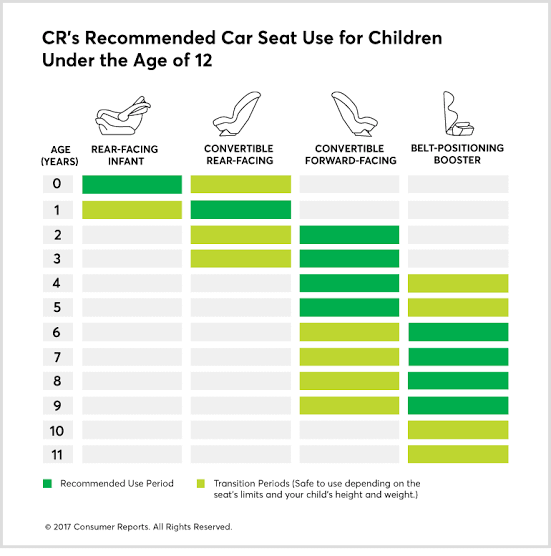
How Long Should a Child Stay Rear-Facing?
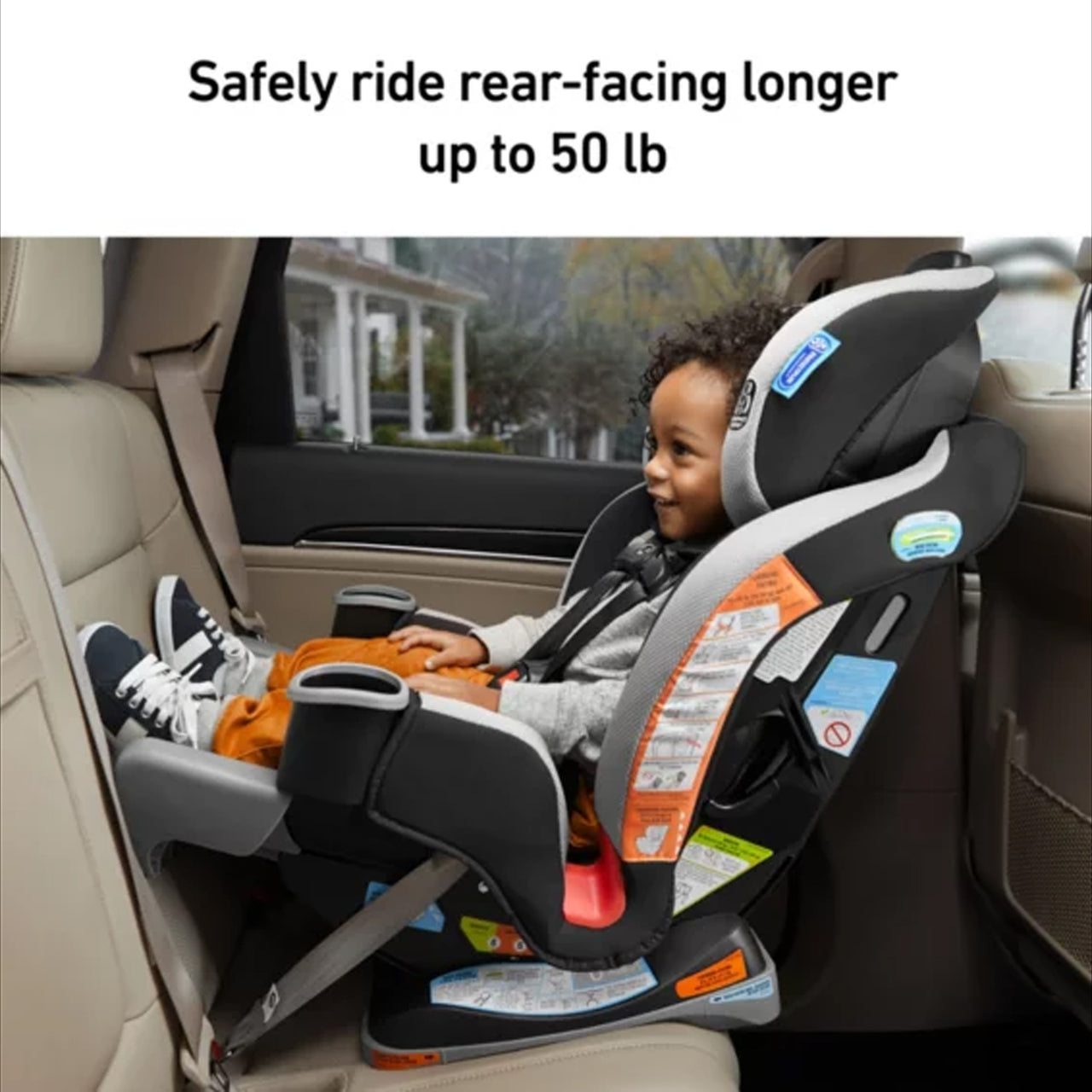
A child should stay rear-facing until reaching the convertible seat’s rear-facing height or weight limit, as long as the seat remains properly installed and the child fits well.
The American Academy of Pediatrics recommends keeping children rear-facing as long as possible, within the limits of the car seat. The National Highway Traffic Safety Administration also advises parents to follow the seat’s height and weight limits and keep children rear-facing until they outgrow that stage.
Do not turn a child forward-facing only because the child reaches age 2. Age is not the only factor. A two-year-old may still have several years of safe rear-facing use left.
Why rear-facing is preferred for young children
Rear-facing seats spread crash forces across the child’s back, neck, and head. This position gives extra support to the areas that are still developing in babies and young children.
Legs touching the vehicle seat are not, by themselves, a reason to turn the seat forward-facing. A child may sit with bent legs or cross their legs while rear-facing. This is usually normal if the child remains within the seat’s stated limits.
Signs that rear-facing use has ended
Check the manual and stop rear-facing use when any of these occurs:
- The child exceeds the rear-facing weight limit.
- The child exceeds the rear-facing height limit.
- The child’s head reaches the seat’s stated maximum position.
- The child no longer fits the harness correctly.
- The manual gives a specific height or headroom rule that the child no longer meets.
Do not rely on a general rule such as “one inch above the shell.” Some manufacturers use that rule, but others use different instructions. The exact manual controls.
When Can a Child Face Forward?
A child can face forward when the child meets the seat’s forward-facing minimums and has outgrown rear-facing use. The seat must also be approved for the child’s size and installed according to the instructions.
Many forward-facing harness modes begin at 22 pounds. Some seats have a higher minimum. A child who weighs 22 pounds is not automatically ready to face forward if the child still fits rear-facing.
Forward-facing use is a transition, not a race. Rear-facing is usually the safer position for a younger child when the child still fits within the rear-facing limits.
Forward-facing harness limits
Common forward-facing limits include:
- Maximum weight of 50, 65, harness pounds or more, depending on the model
- Maximum standing height, often around 49 inches
- A top harness slot or shoulder-height rule
- A maximum headrest position
- A minimum age listed by the manufacturer
Use the internal harness until the child reaches the forward-facing limits. Do not move to a booster early just because the child is tall enough to sit in one.
Correct harness position
For forward-facing use, the harness straps usually come from at or above the child’s shoulders. For rear-facing use, the straps usually come from at or below the shoulders.
These are common rules, but the seat manual may give a more specific instruction. Check the manual each time you raise or lower the harness.
The chest clip should sit at armpit level. It should not rest on the stomach or neck. The harness should lie flat and snug, with no slack that can be pinched at the shoulder.

Source: dearestdiapers.com
Does a Child Need to Meet Both Height and Weight Limits?
Yes. A child must remain within the height and weight limits for the exact mode being used.
Use this simple check:
- Find the car seat label or manual.
- Confirm the child’s current weight.
- Measure the child’s height in the way the manual requires.
- Check the harness and headroom.
- Use the seat only if every limit is met.
Example
A convertible seat may have these limits:
- Rear-facing: 5–40 pounds and up to 40 inches
- Forward-facing: 22–65 pounds and up to 49 inches
A 38-pound child who is 41 inches tall has exceeded the rear-facing height limit. That child should not continue rear-facing in that seat, even though the child is below 40 pounds.
The same child may qualify for forward-facing use if the child meets the seat’s minimum age and weight rules. The parent must still check the manual and install the seat correctly.
Use the first limit reached
The first limit reached ends that mode. This includes a height, weight, headroom, harness, or age limit when the manufacturer lists one.
Do not add extra capacity by removing the seat’s headrest, changing the harness path, or using an accessory that the manufacturer does not approve.
How to Measure Your Child for a Convertible Car Seat
Accurate measurements help, but they do not replace a fit check.
Measure body weight
Use a reliable home scale. Measure the child without heavy shoes or bulky clothing. Record the weight in pounds.
Do not estimate a child’s weight from age. Children of the same age can have very different body sizes.
Measure standing height
Have the child stand barefoot with the back against a wall. Keep the heels near the wall and look straight ahead. Mark the top of the head and measure from the floor to the mark.
This measurement is useful when the seat lists a standing-height limit.
Check seated or torso height only when required
Some seats use seated height or torso height. Follow the manufacturer’s method exactly. A homemade measurement may not match the method used by the seat maker.
Check fit inside the seat
After measuring, place the child in the installed seat and check:
- The harness comes from the correct shoulder position.
- The straps lie flat.
- The chest clip is at armpit level.
- The harness is snug.
- The child’s head stays within the allowed area.
- The child’s clothing does not create hidden slack.
- The child’s body does not push the harness out of position.
A child can be below the listed height and weight limits but still need a different adjustment or seat if the harness cannot be positioned correctly.

Source: babyworlds.com
Convertible Car Seat Fit by Age and Stage
Age can help explain the stages, but height and weight limits decide whether the seat fits.
Babies and infants
Infants should ride rear-facing. A newborn must meet the seat’s minimum weight and fit the harness and body support rules.
Many convertible seats start at 5 pounds. Some require a higher minimum weight. A small infant may need a different seat if the harness does not fit snugly or the baby’s head and body do not remain in the correct position.
Toddlers
Toddlers often have several years of rear-facing use available. Keep using rear-facing until the child reaches the seat’s rear-facing limit.
Do not turn the seat forward-facing because the child’s feet touch the vehicle seat or because the child seems cramped. Check the actual limits and fit.
Preschool-age children
A preschool-age child may still use a forward-facing harness. Many children can remain in this mode until they reach the seat’s height or weight limit.
Move to a booster only when the child has outgrown the harness mode and can sit correctly for the whole ride.
School-age children
A booster may be needed after the harness is outgrown. A child should use a booster until the vehicle seat belt fits without help.
The lap belt should lie flat across the upper thighs, not the stomach. The shoulder belt should cross the chest and shoulder, not the neck or face. The child should sit back against the vehicle seat with knees bent at the edge and feet supported when possible.
When Is a Convertible Car Seat Outgrown?
A convertible car seat is outgrown when the child exceeds any limit for the current mode or no longer fits the seat correctly.
Common signs include:
- The child exceeds the listed weight limit.
- The child exceeds the listed height limit.
- The harness cannot sit at the required shoulder position.
- The child’s head reaches the stated maximum point.
- The harness cannot become snug.
- The child’s body no longer fits between the seat’s side areas.
- The child cannot stay seated correctly.
Do not judge by appearance alone. A seat may look small while the child still fits within its stated limits. Another child may exceed a height or harness rule even if the seat looks roomy.
What to do when the rear-facing mode is outgrown
If the child has outgrown rear-facing but meets the forward-facing rules, install the seat forward-facing with the harness.
If the child has outgrown the entire seat, choose a new seat with limits that match the child’s size. A larger rear-facing seat may be useful if the child is still young and the family wants to continue rear-facing.
What to do when the harness mode is outgrown
Move to a belt-positioning booster only if:
- The child meets the booster’s minimum size.
- The vehicle has a lap-and-shoulder belt.
- The booster is approved for the child’s size.
- The child can sit upright for the full trip.
A booster is not a safe replacement for a harness if the child leans, slouches, places the shoulder belt behind the back, or cannot remain in position.

Source: carseat24.blogspot.com
Federal Rules, State Laws, and Manufacturer Instructions
U.S. car seats must meet applicable federal requirements, including Federal Motor Vehicle Safety Standard 213. That standard does not create one height and weight limit for every convertible seat.
The manufacturer sets the limits for each model. The seat label and manual explain how the seat was designed to be used. State laws may also set minimum requirements for age, size, rear-facing use, forward-facing use, or booster use.
A state law is a legal minimum. It may not be the same as the safest practice for a particular child.
Check these sources in this order:
- The car seat label
- The car seat manual
- The vehicle owner’s manual
- Your state’s child passenger safety law
- Current guidance from NHTSA and the American Academy of Pediatrics
If the manual is missing, contact the manufacturer or download the correct version from its official website. Do not rely on a manual for a similar model.
Common Mistakes With Height and Weight Limits
Turning forward-facing at a set birthday
A birthday does not prove that a child has outgrown rear-facing use. Check the actual limits first.
Using the maximum weight as the only limit
Height, headroom, harness position, and body fit also matter. The child must meet all requirements.
Adding winter coats under the harness
Thick coats can create slack between the child and the harness. Use thin layers, then place a blanket over the secured harness if needed. Follow the seat maker’s instructions.
Using unapproved inserts or accessories
Aftermarket head supports, harness pads, covers, and toys may change how the seat works. Use only items that came with the seat or are approved by the manufacturer for that model.
Moving to a booster too soon
A booster requires maturity. The child must sit correctly and keep the belt in the right place for every ride.
Ignoring the vehicle manual
A car seat can fit one seating position but not another. The vehicle manual may limit lower-anchor use, center-seat installation, tether use, or the total weight allowed with anchors.
Relying on online charts
Online charts can be outdated or combine limits from different models. Use them for general education only. The label and current manual control.
Source: cabinet.matttroy.net
How to Check a Convertible Car Seat Before Each Trip
Use this quick check:
- The seat is installed tightly.
- The seat moves no more than 1 inch side to side or front to back at the belt path, when checked as directed by the manual.
- The correct belt path or lower-anchor path is used.
- The top tether is used for forward-facing installation when required or allowed by the instructions.
- The child’s back and bottom are against the seat.
- The harness is flat and snug.
- The chest clip is at armpit level.
- The harness comes from the correct shoulder position.
- The seat is not expired or damaged.
- The child is within the current height and weight limits.
If you are unsure, a certified Child Passenger Safety Technician can check the installation and child fit. The National Highway Traffic Safety Administration provides information about finding inspection help in the United States.
Official U.S. Resources
Use official sources for current instructions and legal information:
- National Highway Traffic Safety Administration: Car Seats and Booster Seats
- American Academy of Pediatrics: Car Seats and Booster Seats
- NHTSA: Find a Car Seat Inspection Station
- Your car seat manufacturer’s official manual and product page
- Your state’s official child passenger safety law
These sources provide general U.S. guidance. The exact limits for a specific seat still come from that seat’s label and manual.

Source: ar.inspiredpencil.com
FAQs About Height and Weight for Convertible Car Seats
What is the maximum weight for a convertible car seat?
Many convertible seats allow rear-facing use to 40 or 50 pounds and forward-facing harness use to 50 or 65 pounds. Some models have different limits. Check the label for the exact model.
Is a 40-pound child too big for rear-facing?
Not always. Some convertible seats allow rear-facing use to 40 pounds, while others allow 45 or 50 pounds. The child must also meet the seat’s height, headroom, and harness rules.
What height is too tall for a convertible car seat?
There is no single U.S. height limit. Many seats list a standing-height limit near 40–49 inches, but the exact limit varies. A child may also outgrow the seat by reaching a headroom or harness-position rule.
Can a child stay rear-facing after age 2?
Yes, if the child remains within the seat’s rear-facing limits and fits correctly. U.S. guidance supports rear-facing use as long as possible within those limits.
When should a child use a booster instead of a convertible seat?
A child should use a booster after outgrowing the forward-facing harness and when the child can sit correctly for the entire ride. The vehicle belt must fit across the upper thighs, chest, and shoulder.
Does a child’s weight matter more than height?
Neither matters more by itself. The child must meet the limits for height, weight, headroom, harness position, and mode. The first limit reached ends that stage.
Conclusion
The right height and weight for a convertible car seat are the limits printed for your specific model. Keep a child rear-facing until reaching the rear-facing height or weight limit. Then use the forward-facing harness until that mode is outgrown. Move to a booster only when the child meets the booster rules and can sit correctly.
Your next step is to find the seat label and manual, record your child’s current height and weight, and check the fit in the installed seat. If any detail is unclear, use the manufacturer’s instructions or have a certified Child Passenger Safety Technician inspect the setup.