
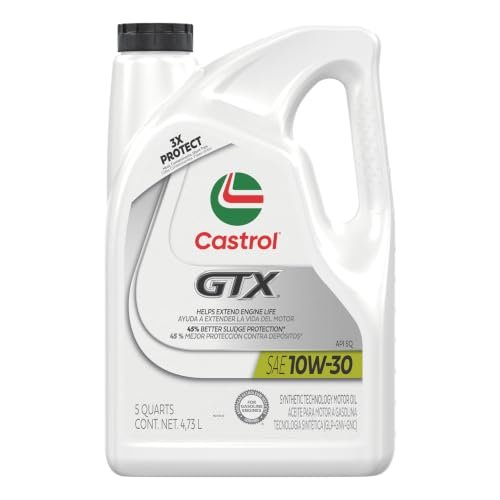
The best conventional motor oil for most older cars is Castrol GTX 10W-30 for trusted wear protection and value.
Older cars often need simple, proven engine oil that protects moving parts without adding extra cost. The right conventional motor oil can help reduce wear, keep deposits under control, and support smooth daily driving. I reviewed five popular options from Castrol and Pennzoil. I focused on viscosity, engine age, driving needs, product value, and the feedback patterns buyers commonly report. Always check your owner’s manual before buying. The correct SAE grade and required performance rating matter more than the brand name alone.
See the differences between my top picks at a glance.
| Product | Viscosity | Best For | Pack Size | My Take | Link |
|---|---|---|---|---|---|
| Castrol GTX 10W-30 | SAE 10W-30 | Older daily drivers | 5 quarts | Best overall | View on Amazon |
| Castrol GTX 10W-40 | SAE 10W-40 | Older engines needing thicker oil | 5 quarts | Best 10W-40 | View on Amazon |
| Pennzoil 10W-30 | SAE 10W-30 | Value-focused owners | 5 quarts | Strong daily-use value | View on Amazon |
| Pennzoil 5W-30 | SAE 5W-30 | Cold starts and lighter engines | 5 quarts | Best cold-weather pick | View on Amazon |
| Pennzoil High Mileage 10W-40 | SAE 10W-40 | Older, higher-mileage cars | 5 quarts | Best for worn engines | View on Amazon |
Castrol GTX 10W-30 Conventional Motor Oil

Castrol GTX 10W-30 is my top conventional oil for many older cars that call for SAE 10W-30. It offers a well-known blend of base oil and cleaning additives for routine engine service. The 10W-30 grade works well in many moderate climates. It also remains easy to find in a five-quart jug.
I like this oil because it fits a wide range of normal driving needs. It makes sense for commuters, family cars, and older trucks that still use a conventional oil specification. The correct oil filter and a timely change matter just as much as the oil itself. I would choose it when the vehicle manual lists 10W-30 and does not require a full synthetic formula.
Pros:
- Strong fit for many older daily drivers
- Useful 10W-30 viscosity for moderate weather
- Five-quart size suits many standard oil changes
- Well-known Castrol GTX product line
- Good balance of protection and purchase value
- Easy choice for owners who prefer conventional oil
Cons:
- Not the right viscosity for every engine
- May not suit vehicles that require synthetic oil
- Cold-weather performance is not as strong as a 5W-30 grade
What Amazon Buyers Are Saying
Buyer feedback commonly focuses on easy ordering, useful five-quart packaging, and the familiar Castrol name. Many owners use it for older cars, trucks, lawn equipment, or vehicles that still specify conventional oil. Buyers also tend to appreciate the price when they complete regular oil changes at home.
Some complaints relate to shipping, damaged containers, or price changes rather than engine performance. A few buyers also report that the product does not fit their vehicle because they did not check the required viscosity first. That point is important. Online reviews cannot replace the oil grade listed in your manual.
My Recommendation
I recommend Castrol GTX 10W-30 as the best conventional motor oil for a typical older vehicle that calls for 10W-30. It is a practical, familiar, and fairly priced choice. Buy it when the required specification matches your car. My overall rating is 4.6 out of 5.
Castrol GTX 10W-40 Conventional Motor Oil

Castrol GTX 10W-40 gives older engines a thicker operating viscosity than 10W-30. That can make it a useful option for vehicles whose manuals list 10W-40. It may also appeal to owners who notice oil use in a worn but still serviceable engine. Still, thicker oil does not fix a mechanical leak or replace a proper repair.
This formula is best for a specific use, not for every car. I would consider it for an older engine in a warm or moderate climate when the manufacturer permits 10W-40. It can suit older pickups, sedans, and utility vehicles with more miles. I would not switch from a recommended 5W-30 without a clear reason and manual approval.
Pros:
- Useful 10W-40 grade for approved older engines
- Good match for many warm-weather driving conditions
- Can suit engines with normal age-related oil use
- Large five-quart container supports home maintenance
- Recognized Castrol GTX name
- Practical price for routine service
Cons:
- Not suitable when the vehicle requires 5W-30 or another grade
- May flow less easily than 5W-30 during cold starts
- Does not repair worn seals, leaks, or internal engine damage
What Amazon Buyers Are Saying
Amazon buyers often like this oil for older vehicles and engines that use a 10W-40 grade. Common positive themes include easy home oil changes, dependable delivery, and the convenience of a five-quart jug. Some owners select it because a trusted mechanic or vehicle manual supports the viscosity.
Negative comments often concern packaging problems, delivery delays, or a higher price than expected. Some buyers also mistake a thicker oil for a universal solution for oil burning. I do not recommend making that assumption. Oil use can come from leaks, worn rings, valve seals, or other faults.
My Recommendation
Castrol GTX 10W-40 is a solid choice when your owner’s manual permits SAE 10W-40. I especially like it for older vehicles used in warm weather. It is not my first pick for modern engines that require a thinner grade. My overall rating is 4.4 out of 5.
Pennzoil 10W-30 Conventional Motor Oil

Pennzoil 10W-30 is a straightforward choice for cars that call for SAE 10W-30 conventional motor oil. It targets routine lubrication and daily engine protection. The familiar Pennzoil brand also makes it easy to compare with other products on the shelf. Its five-quart size fits many passenger car oil changes.
I see this oil as a strong value alternative to Castrol GTX 10W-30. It works best for owners who follow a regular service plan and want a known brand at a reasonable cost. It may suit older cars, small trucks, and other gasoline engines that allow this grade. Always confirm the required API performance category and viscosity before purchase.
Pros:
- Simple 10W-30 option for approved applications
- Useful five-quart package for home oil changes
- Good fit for routine commuter driving
- Established Pennzoil brand
- Often attractive for budget-minded maintenance
- Easy to pair with a new quality oil filter
Cons:
- Not a universal oil for every model year
- May not offer the cold-start advantage of 5W-30
- Conventional oil may not meet newer vehicle requirements
What Amazon Buyers Are Saying
Common buyer themes include good value, fast delivery, and confidence in the Pennzoil label. Many reviewers purchase it for older vehicles and perform their own oil changes. Buyers also like receiving a full five-quart quantity for a standard service job.
Some reviews mention leaking jugs, damaged boxes, or changes in price and availability. Other complaints come from customers who expected a synthetic or high-mileage formula. I recommend reading the exact label and product description before placing an order. Product names can look similar across the Pennzoil range.
My Recommendation
Pennzoil 10W-30 is worth buying when your vehicle permits 10W-30 and you want a dependable conventional oil at a fair cost. It narrowly trails my top Castrol pick, but it remains a smart value choice. My overall rating is 4.5 out of 5.
Pennzoil 5W-30 Conventional Motor Oil

Pennzoil 5W-30 is the cold-weather option in this group. The first number shows its lower-temperature flow rating, while the 30 describes its operating viscosity. That makes it a common fit for many newer and older vehicles that specify 5W-30. It remains a conventional choice for drivers who do not need synthetic oil.
I would look closely at this product if your car sees cold mornings or seasonal temperature changes. A 5W-30 oil can support easier cold cranking than a 10W-40, when both are approved for the engine. However, the vehicle maker’s recommendation remains the deciding factor. Do not choose it only because the number sounds better for winter.
Pros:
- 5W rating suits many cold-start conditions
- Common viscosity for passenger vehicles
- Useful five-quart size for regular service
- Good option for daily commuting
- Recognized Pennzoil product line
- May offer easier cold flow than thicker grades
Cons:
- Not suitable if the engine requires 10W-30 or 10W-40
- Conventional formula may not suit modern synthetic-only engines
- Does not target high-mileage seal concerns
What Amazon Buyers Are Saying
Buyers often praise this oil for its common 5W-30 grade and convenient five-quart container. Many use it in cars that receive frequent highway or city service. Positive reviews also mention simple ordering and the benefit of buying enough oil for a complete change.
Some customers report concerns about shipping damage or receiving a product that differs from what they expected. A few reviews show confusion between conventional, synthetic blend, and full synthetic oil. I suggest checking the label, API mark, viscosity, and vehicle manual before use.
My Recommendation
Pennzoil 5W-30 is my preferred pick here for approved 5W-30 applications, especially when cold starts matter. It offers a useful mix of familiar branding, practical viscosity, and fair value. It can be the best conventional motor oil for a compatible daily driver. My overall rating is 4.6 out of 5.
Pennzoil High Mileage 10W-40 Motor Oil

Pennzoil High Mileage 10W-40 is designed for older vehicles with more miles. The 10W-40 grade provides a thicker operating viscosity than 5W-30 or 10W-30. High-mileage oils also target common concerns such as oil consumption and aging seals with special additive packages. They cannot restore worn parts, but they can support an older engine’s maintenance plan.
I would consider this oil for a compatible vehicle that has passed the high-mileage stage and still uses conventional oil. It may fit an older sedan, truck, or utility vehicle that needs 10W-40. Check for the proper performance rating before you buy. If the engine requires a modern full synthetic oil, this product is not the right substitute.
Pros:
- Made for high-mileage vehicle maintenance
- 10W-40 grade suits approved older engines
- Useful choice for some engines with age-related oil use
- Five-quart jug supports a complete oil change
- High-mileage additive package adds a useful focus
- Strong option for older cars driven in moderate weather
Cons:
- Thicker grade may not suit cold climates or newer engines
- High-mileage oil cannot repair a mechanical leak
- Usually costs more than basic conventional oil
What Amazon Buyers Are Saying
Amazon buyers commonly choose this oil for older cars with high odometer readings. Positive feedback often mentions smoother operation, easy oil changes, and interest in the high-mileage formula. Some owners also report that the product fits their normal maintenance routine at a reasonable cost.
Complaints often involve damaged containers, shipment issues, or expectations that the oil would stop an existing leak. That expectation needs care. Additives may help some seal-related issues, but they cannot fix a failed gasket or serious engine wear. Buyers should also confirm that 10W-40 appears in the approved viscosity list.
My Recommendation
Pennzoil High Mileage 10W-40 is my best targeted option for an older, high-mileage engine that permits this grade. I like its purpose-built approach, but I would not use it as a universal upgrade. It earns 4.5 out of 5 overall.
How to Choose the Best Conventional Motor Oil
Choosing the best conventional motor oil starts with your vehicle, not the most attractive bottle. Read the owner’s manual and compare the required SAE viscosity and performance category with the label. Then think about climate, mileage, driving style, and change intervals. Conventional oil can work well in approved older applications, but newer engines may require synthetic oil or a specific manufacturer approval.
1. Match the SAE Viscosity to Your Engine
SAE numbers describe how oil flows at different temperatures. In a grade such as 5W-30, the “W” relates to winter flow, and the second number describes viscosity at operating temperature. A lower winter number generally supports easier flow during cold starts. The second number must still match the engine’s design and the manufacturer’s instructions.
Do not pick 10W-40 just because your car has many miles. Some engines need 5W-30 for proper flow and fuel economy. Other older engines may allow 10W-30 or 10W-40. The manual may list more than one approved grade for different outdoor temperatures. Follow that chart when available.
For a cold region, an approved 5W-30 may make more sense than a 10W-30. For a warm region and an older engine, an approved 10W-40 may work well. This is why Pennzoil 5W-30 and Castrol GTX 10W-40 serve different needs. Neither is automatically better for every vehicle.
2. Check the Oil Standard and Vehicle Requirements
Look for the current API service mark or the performance level listed by your vehicle maker. The oil label should clearly state the standard it meets. Some vehicles also need a maker approval or a special specification. These details matter more than a broad claim such as “advanced protection.”
Use conventional oil only when the manual allows it. Many older engines were built around conventional oil and work well with a regular change schedule. Newer engines may need full synthetic oil because of turbochargers, tight clearances, heat, or a long drain interval. Using the wrong type can affect protection and warranty requirements.
Also check whether the engine uses gasoline or diesel oil. The products in this review focus on common gasoline applications. A diesel engine may need a different performance category and additive system. When in doubt, ask a qualified technician and compare the bottle with the exact manual requirement.
3. Compare Mileage, Climate, and Total Value
High mileage changes the buying question. An older engine may have more oil use, small seal leaks, or greater internal wear. A high-mileage formula may be worth trying when the vehicle maker permits it. Still, inspect the engine if oil loss increases. No motor oil can replace a repair.
Climate also affects your choice. Very cold weather increases the value of a suitable low-temperature viscosity. Hot weather and heavy loads can make the approved higher grade more useful. Towing, frequent short trips, dusty roads, and long idle periods can also increase the need for careful service.
Finally, compare the cost per quart, not just the shelf price. A five-quart jug often costs less than several single bottles. Add the price of an oil filter and consider the correct change interval. I prefer a reasonably priced oil that matches the manual and receives regular changes over an expensive product used too late.
Storage matters too. Keep unopened oil sealed in a clean, dry place away from strong heat. Check the container for damage before pouring. During service, use the dipstick and add the correct amount. Overfilling can cause problems, so measure carefully and follow the vehicle instructions.
Final Verdict: Which Should You Buy?
Castrol GTX 10W-30 is my best conventional motor oil pick for most compatible older daily drivers. Choose Pennzoil 5W-30 for approved cold-weather use, or Pennzoil High Mileage 10W-40 for a compatible high-mileage engine.
The best conventional motor oil is always the one that matches your manual, climate, and service plan. Confirm the grade before ordering, then change the oil and filter on time.
FAQs Of best conventional motor oil
Is conventional motor oil still good for older cars?
Yes. Conventional oil can work well in older vehicles when the owner’s manual allows it. Use the correct viscosity and performance rating, then follow a regular change schedule.
What is the best conventional motor oil for high-mileage engines?
Pennzoil High Mileage 10W-40 is a strong choice for an approved high-mileage engine. Confirm that your manual permits 10W-40 before using it.
Is 5W-30 better than 10W-30?
Neither grade is always better. An approved 5W-30 may flow more easily during cold starts, while 10W-30 may suit certain engines and climates. Follow the manual.
Can thicker oil stop an engine oil leak?
Thicker oil may change oil use in some worn engines, but it cannot repair a failed seal, gasket, or damaged part. Find and fix the source of the leak.
How often should I change conventional motor oil?
Use the interval in your owner’s manual. Severe service, short trips, towing, dust, and frequent idling may require more frequent changes.