
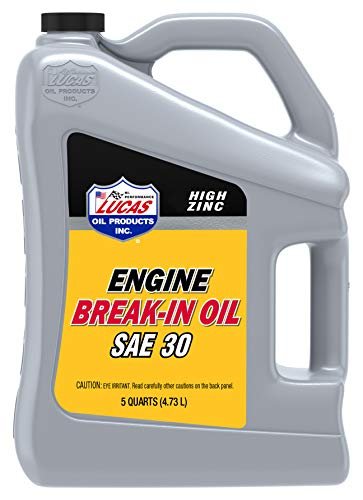
For most flat-tappet builds, Lucas SAE 30 Racing Break-In Oil is the best engine break in oil choice.
A fresh engine needs more than clean oil. It needs the right film strength, wear protection, and friction control while rings, bearings, lifters, and cam lobes settle in. Many new engine owners face the same problem: regular street oil may not suit a flat-tappet cam, while a high-zinc racing oil may not suit every modern engine. I compared five popular break-in oil options by viscosity, use case, format, and value. I also considered what engine builders commonly look for during the first start, cam break-in, and early oil change.
See the differences between my top picks at a glance.
Lucas SAE 30 Break-In Oil
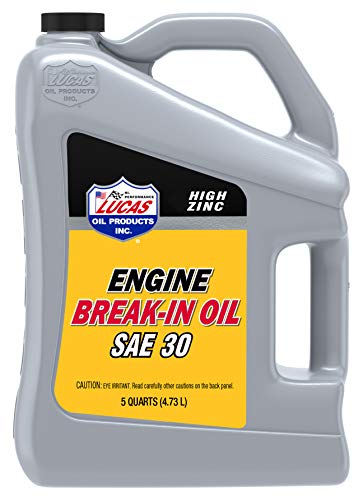
Lucas Oil 10631 is a dedicated SAE 30 racing engine break-in oil. Its single-grade viscosity makes it a natural fit for many fresh performance engines. The product is listed for use with ethanol, methanol, and high-octane race fuel. That makes it especially useful for builders who run a carbureted race engine or a modified classic engine.
I like this oil for flat-tappet cam break-in because it keeps the formula simple and purpose-built. SAE 30 can offer a useful balance between flow and film strength in a new engine when the builder calls for that grade. Still, viscosity must match bearing clearances, ambient temperature, and the engine maker’s instructions. This is not a universal oil for every late-model vehicle or factory warranty application.
Pros:
- Purpose-built for engine break-in use
- SAE 30 grade suits many classic and performance builds
- Available in a practical five-quart size
- Listed as compatible with ethanol and methanol fuel
- Works well for builders who want a dedicated break-in oil
- Useful for many flat-tappet cam applications when the engine maker approves it
Cons:
- SAE 30 may not suit cold climates or tight modern engines
- Not the best choice when the owner needs a factory-approved street oil
- Buyers must confirm additive and viscosity needs before use
What Amazon Buyers Are Saying
Amazon buyer feedback for this type of Lucas racing oil often centers on engine rebuild work, classic cars, and performance projects. Buyers commonly value the dedicated break-in purpose and the convenient five-quart package. Some users also appreciate that the oil suits fuel types used in racing applications. Reviews can vary by engine, so personal results do not replace the cam maker’s or engine builder’s instructions.
Common concerns include the single-grade viscosity and the need to understand the oil before pouring it into a modern engine. Some shoppers also compare the price with ordinary motor oil. That comparison is not always fair because break-in oil serves a different purpose. I recommend reading the current Amazon listing and checking the seller before ordering, since packaging and availability can change.
My Recommendation
I recommend Lucas SAE 30 when you are breaking in a compatible classic, racing, or flat-tappet engine. It is my top overall pick because the formula, viscosity, and intended use align well with common engine-build needs. Do not use it by habit. Check the required oil grade, cam type, clearances, and break-in plan first.
Royal Purple 10W-30 Break-In Oil

Royal Purple 11487 is a 10W-30 engine break-in oil sold in a six-quart package. That format can be convenient for engines that need more than five quarts or for owners who want a small amount left for topping off. The 10W-30 grade also gives this product a broad fit across many mild performance and street-oriented builds. It may be a practical choice when the engine builder specifies a multi-grade oil.
The main strength here is flexibility. A 10W-30 oil can flow more easily during a cold start than a straight SAE 30 oil, yet it still provides a familiar hot viscosity for many engines. The correct choice still depends on the engine design and break-in procedure. I would not treat this product as a substitute for the oil grade listed by the cam, piston, or engine manufacturer.
Pros:
- Useful 10W-30 viscosity for many street and performance engines
- Six-quart package can cover larger oil capacities
- Good option when the builder calls for a multi-grade break-in oil
- Convenient for owners who want extra oil for a top-off
- Suitable for projects that need a less specialized viscosity than SAE 30
- Comes from a well-known performance lubricant brand
Cons:
- Not ideal for every high-clearance or very hot race engine
- Some engines may need a different viscosity during initial running
- Buyers should verify the exact package size and current listing details
What Amazon Buyers Are Saying
Amazon reviews for Royal Purple break-in oil tend to highlight the ease of buying a multi-quart case and the fit for engine rebuild projects. Buyers often like having enough oil for a full fill without mixing brands or making a second order. Some comments also point to the familiar 10W-30 grade as a reason for choosing it over a heavier racing oil.
The main questions in buyer feedback usually involve viscosity, price, and whether the oil fits a particular engine. Those are valid questions because break-in oil selection is not one-size-fits-all. I suggest checking the latest product description, seller information, and engine instructions before purchase. Amazon reviews can show real use patterns, but they cannot confirm that an oil is right for your exact clearances or camshaft.
My Recommendation
This is my preferred Royal Purple option for a street-based rebuild that calls for 10W-30. The six-quart package adds value when the sump holds more than five quarts. It is worth buying if its viscosity and break-in chemistry match your build. Choose another product if your engine requires SAE 30 or 20W-50.
Lucas SAE 20W-50 Break-In Oil

Lucas Oil 10636 uses an SAE 20W-50 grade for racing engine break-in. The heavier hot viscosity makes it a candidate for certain older engines, loose-clearance builds, and applications that run at high temperature. The product listing also identifies compatibility with ethanol, methanol, and high-octane race fuel. It comes in a five-quart package for a typical engine fill.
Heavy oil can help maintain a strong oil film when the engine design calls for it. However, more viscosity does not always mean more protection. A thick oil can slow cold flow and may not suit a tight modern engine. I would choose this product only after confirming the oil grade with the engine builder, especially if the engine will start in cool weather.
Pros:
- 20W-50 grade suits some high-temperature and high-clearance builds
- Designed for racing engine break-in use
- Five-quart package fits many common engine oil capacities
- Listed for use with several racing fuel types
- Can suit older performance engines that need heavier oil
- Offers an alternative to lighter 10W-30 and SAE 30 products
Cons:
- May flow too slowly during cold starts
- Too heavy for many modern tight-clearance engines
- Not the right choice simply because the engine is new
What Amazon Buyers Are Saying
Amazon buyers who select 20W-50 break-in oil generally seem focused on racing engines, older designs, or builds with a known need for heavier oil. Positive comments often relate to the product’s intended use and the convenience of receiving a full five-quart fill. Some buyers also value the fuel compatibility shown in the product description.
Negative or cautious comments tend to involve the oil’s weight. Shoppers may wonder if 20W-50 is too thick for their climate or engine. That concern is reasonable. Buyer experiences cannot replace a measured bearing-clearance check or a manufacturer recommendation. I would treat this oil as a specialist option, not as a general-purpose answer for every new engine.
My Recommendation
I recommend Lucas SAE 20W-50 for a specific build that calls for heavy oil. It can be a strong choice for some warm-weather race engines and older engines with wider clearances. It is not my first choice for a typical modern rebuild. Buy it only when your engine plan supports 20W-50.
Lucas Break-In Oil Additive

Lucas Oil 10063 is an engine break-in additive rather than a complete oil fill. The 16-ounce bottle is designed to add break-in support to a compatible base oil. The listing highlights protection for the camshaft, lifters, and valve train during the break-in period. This format gives experienced builders more control over the oil grade they use.
An additive can help when an engine plan calls for a specific conventional oil that does not offer the desired break-in package. It also lets the builder match viscosity to the engine instead of accepting the grade in a premixed product. The risk comes from over-treating or mixing products without checking compatibility. I would follow the label dose and avoid combining several zinc additives unless a qualified builder approves the blend.
Pros:
- Lets the builder choose the base oil and viscosity
- Useful for camshaft, lifter, and valve train break-in plans
- Compact 16-ounce bottle is easy to store
- Can support custom oil combinations
- Helpful when a complete break-in oil is not available in the needed grade
- Works well for experienced owners who understand oil additive ratios
Cons:
- It is not a complete motor oil by itself
- Incorrect dosing can change the intended oil chemistry
- Less convenient for first-time engine builders
What Amazon Buyers Are Saying
Amazon buyers who choose this additive often want control over the base oil. Reviews commonly focus on engine rebuilds, camshaft protection, and the ability to add a treatment to a selected oil. Some buyers like the small bottle because it takes less space than a full case of specialty oil.
The most important concern is correct use. Buyers may ask how much to add, which base oil to choose, or whether the additive belongs in a modern emissions-controlled engine. Those questions show why the product requires more knowledge than a ready-to-use oil. I recommend checking the current label directions and your camshaft supplier’s instructions before adding it.
My Recommendation
This is a good tool for an experienced builder, but it is not the easiest best engine break in oil solution for a beginner. I would buy it when I needed a custom viscosity or a specific base oil. For simple projects, a complete break-in oil is easier and reduces dosing mistakes.
Royal Purple High Performance Oil
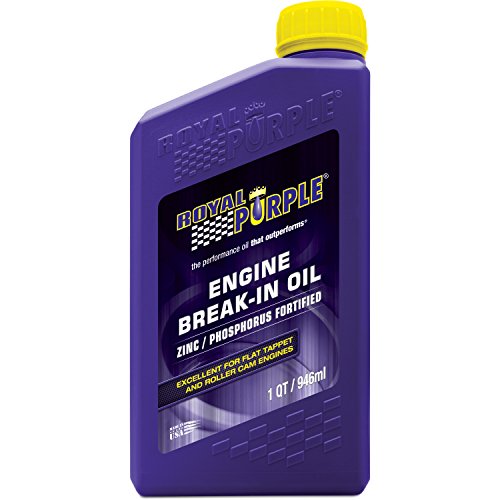
This Royal Purple 11487 listing presents a single-quart bottle of high-performance engine break-in oil. A one-quart format can help when an engine needs a top-off or when an owner wants to test the product before buying a larger package. It also fits projects where the builder already has part of the required oil supply. The product uses the same listed 10W-30 grade associated with the larger Royal Purple package.
The small bottle is its main point of difference. It may save waste for a partial fill, but it usually costs more per quart than a multi-quart case. I would also check the product page closely because similar product names and package sizes can cause ordering mistakes. This oil still needs to match the engine plan, and a one-quart bottle does not change that rule.
Pros:
- Convenient one-quart format
- Useful for topping off a compatible break-in fill
- Good option for small projects or trial purchases
- 10W-30 grade suits many street-oriented builds
- Easy to store in a garage or workshop
- May help avoid buying a full case for a small oil need
Cons:
- Usually offers less value per quart than a multi-quart pack
- One bottle cannot fill most complete engines
- Package and product details require careful checking before purchase
What Amazon Buyers Are Saying
Buyer feedback for the one-quart format often focuses on convenience. Shoppers may use it for a top-off, a partial fill, or a small engine project. The compact size also appeals to people who want spare oil on hand without storing a full case.
The most common practical issue is quantity. A buyer may expect enough oil for a complete change and then discover that one quart is not sufficient. Price per quart can also draw attention. I see this product as a useful supplement, not the best value for a full engine rebuild unless the listing price makes sense.
My Recommendation
I recommend this bottle for a top-off or small oil requirement. It is less attractive for a complete break-in because most engines need several quarts. Choose the six-quart Royal Purple package when you need a full fill and the engine calls for 10W-30.
How to Choose the Best Engine Break In Oil
Choosing the best engine break in oil starts with the engine, not the label. A fresh engine has new surfaces that must mate under controlled load. The oil must support that process without causing excess drag, poor cold flow, or unwanted additive conflicts. Before I buy, I check the engine builder’s break-in sheet, the camshaft instructions, the oil grade, and the planned first oil change.
1. Match the Oil to the Engine Design
First, identify the engine and valve train. Flat-tappet camshafts often need more attention during break-in than many roller-cam designs. The cam maker may specify a dedicated break-in oil or a zinc level. Follow that instruction first.
Next, check bearing clearances and the planned operating temperature. An older engine with wider clearances may need a heavier grade such as 20W-50. A tight street engine may call for 10W-30 or another lighter oil. A single-grade SAE 30 oil can work well in the right setting, but it may not be ideal in cold weather.
Do not choose a heavier oil just because it sounds safer. Oil must reach the bearings, cam, lifters, and other parts quickly. The best engine break in oil is the one that matches the measured build and the maker’s written plan.
2. Check the Additive Plan and Fuel Use
Break-in oil often differs from ordinary passenger-car oil. A performance engine may need extra anti-wear support during the first run. Zinc compounds, often discussed as ZDDP, can help protect certain sliding parts. More is not always better, though. Too much additive can upset the balance of the oil or create problems in systems that need emissions control compatibility.
Never pour a separate zinc additive into a premixed break-in oil without a clear reason. If you use an additive, follow the label dose and confirm the base oil. The Lucas additive makes sense when you want to select your own oil grade. It adds complexity, so I prefer a ready-to-use product for simple builds.
Fuel also matters for racing projects. The Lucas racing products in this comparison list compatibility with ethanol, methanol, and high-octane race fuel. That detail can help a race builder, but it does not mean the oil suits every fuel system or street vehicle. Always consider fuel dilution, storage time, and the complete engine setup.
3. Compare Quantity, Change Timing, and Total Value
Buy enough oil for the initial fill and the planned early change. Many builders change the oil after the first controlled run or after a short break-in period. The exact time depends on the engine maker, cam supplier, and inspection plan. A fresh filter is also part of that process.
A five-quart package may fit many engines. A six-quart case may suit a larger sump and leave some oil for a top-off. A one-quart bottle can help with a small need, but it usually costs more per quart. Additives may look inexpensive, yet you must also buy a suitable base oil and measure the mixture correctly.
Finally, inspect the current Amazon listing before ordering. Confirm the viscosity, bottle count, seller, and product image. Packaging can change. So can price and stock status. I also avoid opening old or damaged bottles because oil storage quality matters. Keep unopened oil in a dry place away from heat and water.
Final Verdict: Which Should You Buy?
For most compatible classic and performance builds, Lucas SAE 30 Racing Break-In Oil is my top pick. Choose Royal Purple 10W-30 when your street engine needs a multi-grade oil. Select Lucas 20W-50 only for a build that truly calls for heavy viscosity.
The best engine break in oil must match your clearances, cam, climate, and break-in plan. Check the engine maker’s instructions before buying, then change the oil on schedule.
FAQs Of best engine break in oil
What is the best engine break in oil for a flat-tappet cam?
A dedicated break-in oil such as Lucas SAE 30 can be a strong choice when its viscosity and additive package match the cam maker’s instructions. Always follow the camshaft manufacturer’s break-in plan.
Can I use regular motor oil to break in a new engine?
Sometimes, but only when the engine builder approves it. A dedicated break-in oil may offer a better fit for new parts and flat-tappet valve trains. Do not assume regular street oil is suitable.
Is SAE 30 better than 10W-30 for engine break-in?
Neither grade is always better. SAE 30 may suit some warm-weather and performance builds, while 10W-30 may flow better during cold starts. Choose the grade specified for your engine.
Should I add zinc additive to break-in oil?
Only if the oil and engine plan require it. Follow the additive label and avoid adding extra treatment without checking compatibility. Too much additive can create problems.
How long should break-in oil stay in a new engine?
Use the interval set by the engine builder or cam manufacturer. Many builders change it early after the first controlled run, but the correct timing depends on the engine and break-in method.