
For most Honda Civics, the best engine oil is the manufacturer-approved full synthetic grade listed in the owner’s manual.
A Civic can run for many years, yet the wrong oil can cause poor cold starts, extra wear, or low oil pressure. I often see drivers choose oil by brand alone. That is not the best way. Viscosity, API rating, engine age, mileage, and climate all matter. I reviewed the listed Honda-compatible products below, including two oil filters that can help complete a proper oil change. Always check your Civic’s oil cap and owner’s manual before you buy.
See the differences between my top picks at a glance.
| Product | Type | Best For | Viscosity | Key Note | Buy |
|---|---|---|---|---|---|
| BOSCH 3323 | Oil filter | Routine oil changes | N/A | FILTECH filtration | View on Amazon |
| PurolatorBOSS PBL14610 | Oil filter | Maximum filter protection | N/A | Spin-on design | View on Amazon |
| Honda 08207-10W30 | Engine oil | Civics calling for 10W-30 | 10W-30 | Honda-branded oil | View on Amazon |
| Valvoline MaxLife 5W-20 | Full synthetic oil | High-mileage Civics | 5W-20 | Seal conditioners | View on Amazon |
| Valvoline MaxLife 5W-30 | Synthetic blend oil | Older, high-mileage engines | 5W-30 | Helps limit oil use | View on Amazon |
BOSCH 3323 Oil Filter

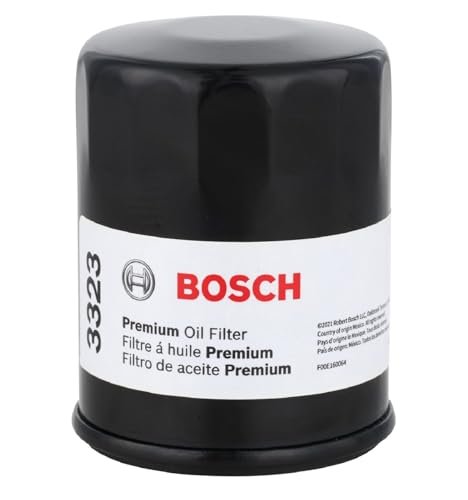
The BOSCH 3323 is an oil filter, not engine oil. That difference matters when you shop for the best engine oil for Honda Civic. Still, a clean filter plays a key role in every oil change. The filter is listed for select Honda Civic models and many other vehicles.
Bosch highlights its FILTECH filtration technology for improved dirt capture. The filter uses a spin-on format for vehicles that accept this design. Fitment can vary by Civic year and engine, so I would confirm the part number before ordering. Pair it with the correct oil grade and a fresh drain-plug washer when needed.
Pros:
- Designed for select Honda Civic applications
- FILTECH media helps capture engine contaminants
- Useful for a normal scheduled oil change
- Known Bosch automotive brand
- Works with many compatible vehicle models
- Simple spin-on replacement format
Cons:
- It does not include engine oil
- Fitment must match the exact Civic year and engine
- Not every Civic uses the same filter design
What Amazon Buyers Are Saying
Customer review patterns for this type of Bosch filter often focus on fit, easy installation, and the value of buying a recognized brand. Buyers who receive the correct part commonly like the solid construction and straightforward replacement. The main concern in fitment products is ordering the wrong size or thread pattern.
Because vehicle applications can overlap, I would not rely only on a broad compatibility list. Check your old filter, Honda part number, or a trusted fitment tool. Reviews can help you judge packaging and delivery, but they cannot replace vehicle-specific fitment data.
My Recommendation
I recommend the BOSCH 3323 as a practical filter choice when its fitment matches your Civic. It is not a substitute for the best engine oil for Honda Civic, but it can support a clean and complete oil service. Buy it for the filter, then select oil by the exact Honda specification.
| Category | Rating |
|---|---|
| Fitment potential | 4/5 |
| Filter design | 4/5 |
| Oil-change value | 4/5 |
| Buying confidence | 3.8/5 |
| Overall Rating | 4/5 |
PurolatorBOSS PBL14610 Filter

The PurolatorBOSS PBL14610 is another filter rather than a bottle of motor oil. It targets several Honda vehicles, including listed Civic applications. That makes it a useful companion product for a full oil change. The filter uses a spin-on format.
Purolator positions the BOSS line as a premium protection filter. Its value depends on correct fitment and a clean installation. I like this option for owners who want to spend more attention on filtration while still using the oil grade that Honda lists for their engine.
Pros:
- Listed for select Honda Civic models
- Premium-positioned PurolatorBOSS product line
- Designed for routine spin-on filter replacement
- Can be paired with synthetic or conventional oil when approved
- Useful for drivers who want a branded filter
- Broad listed vehicle coverage
Cons:
- It is not motor oil
- Exact fitment still depends on model year and engine
- Premium filter pricing may not suit every oil-change budget
What Amazon Buyers Are Saying
Buyers commonly look for three things in an oil filter: a correct fit, clean packaging, and confidence in the filter media. Reviews for products in this category often praise easy installation when the vehicle match is correct. Some complaints tend to involve mistaken fitment, damaged packaging, or delivery issues.
I suggest reading recent reviews for the exact listing and checking the vehicle selector before purchase. A filter can look similar to another model and still use a different thread or gasket. That check takes less than a minute and can prevent an oil leak.
My Recommendation
The PurolatorBOSS PBL14610 is worth considering if your Civic matches the listed application. I would choose it over a lower-cost unknown filter when the price difference is small. However, the engine oil remains the more important match. Use the correct viscosity and API category first.
| Category | Rating |
|---|---|
| Filtration focus | 4.3/5 |
| Fitment potential | 4/5 |
| Build confidence | 4.2/5 |
| Value | 3.9/5 |
| Overall Rating | 4.1/5 |
Honda 08207-10W30 Engine Oil

Honda 08207-10W30 is the only Honda-branded motor oil in this comparison. Its 10W-30 viscosity may suit some older Civic engines and certain operating conditions. It should not be treated as a universal choice for every Civic. Many newer Honda engines call for a different grade, often 0W-20.
The key benefit here is brand alignment. Some owners prefer Honda oil because it follows the maker’s product line and keeps the choice simple. Still, the bottle label and owner’s manual must agree. If your Civic calls for 10W-30, this product becomes a sensible choice; if not, choose the specified grade instead.
Pros:
- Honda-branded engine oil
- Clear 10W-30 viscosity
- Good match for compatible older Civic applications
- Simple choice for owners who prefer factory-brand fluids
- Can support a scheduled oil change when the manual allows 10W-30
- Easy to pair with a matching Honda maintenance routine
Cons:
- 10W-30 is not correct for every Honda Civic
- May not be the best cold-start grade for newer engines
- Product details such as pack size should be checked before ordering
What Amazon Buyers Are Saying
Buyers who select Honda-branded oil often value the familiar label and the feeling of using a product made for Honda vehicles. Common positive themes include convenient delivery and confidence in the brand. Some shoppers, however, compare the price with larger aftermarket oil brands.
Review feedback does not prove that one brand works in every Civic. It mainly shows how the product performs for the buyer’s vehicle and service plan. I would focus on the stated viscosity, current API mark, package condition, and the correct quantity for your engine.
My Recommendation
I recommend Honda 08207-10W30 only for a Civic whose manual or oil cap permits 10W-30. It is a reasonable factory-brand pick for that use. It is not my universal winner because viscosity varies by year, engine, and market.
| Category | Rating |
|---|---|
| Honda brand fit | 4.5/5 |
| 10W-30 suitability | 4/5 |
| Cold-weather flexibility | 3.5/5 |
| Value | 3.9/5 |
| Overall Rating | 4/5 |
Valvoline MaxLife Full Synthetic 5W-20

Valvoline MaxLife Full Synthetic 5W-20 is the strongest oil choice in this group for a high-mileage Civic that calls for 5W-20. It uses a full synthetic formula and includes seal conditioners. Valvoline markets this line for engines with more than 75,000 miles.
The 5W rating supports easier flow in cold weather than a thicker 10W grade. The 20 at operating temperature keeps it within the grade used by many Honda engines. It can help reduce oil use and leaks in an older engine, but it cannot repair a failed seal or worn mechanical part.
Pros:
- Full synthetic 5W-20 formula
- Designed for high-mileage engines
- Seal conditioners may help reduce minor seepage
- Good cold-start flow for the listed grade
- Useful for Civics with more than 75,000 miles
- Strong choice when the manual specifies 5W-20
Cons:
- Not suitable when the Civic requires 0W-20 or 5W-30
- Seal conditioners cannot fix major leaks
- High-mileage formulas may not be needed in a low-mileage engine
What Amazon Buyers Are Saying
Amazon buyers often choose MaxLife because they want help with oil use, small leaks, or an older engine that feels less tight than before. Positive reviews commonly mention easy ordering, smooth engine operation, and good value per quart. Some buyers report that their oil level still drops, which is expected when wear or a leak has another cause.
Oil-change reviews can be subjective. A quieter engine does not prove that the oil repaired wear. I look for repeated comments about the correct viscosity, sealed packaging, and consistent results across more than one oil change. I also remind buyers to check the dipstick on a level surface.
My Recommendation
This is my top pick for many high-mileage Civics that specify 5W-20. It offers the benefits of a synthetic base with an aging-engine focus. I would buy it when the manual allows 5W-20 and the engine shows mild oil use or seal seepage.
| Category | Rating |
|---|---|
| High-mileage support | 4.6/5 |
| Cold-start flow | 4.5/5 |
| Wear protection | 4.5/5 |
| Value | 4.4/5 |
| Overall Rating | 4.5/5 |
Valvoline MaxLife 5W-30 Blend
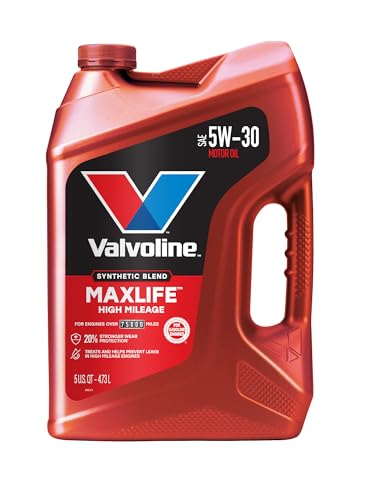
Valvoline MaxLife 5W-30 is a synthetic blend made for high-mileage engines. Its thicker operating grade can suit an older Civic when Honda allows 5W-30. The formula includes features aimed at aging engines, such as seal conditioners and support for reduced oil consumption.
This product makes sense for a Civic that has many miles and a small amount of oil use. The blend may also offer a useful balance between cost and high-mileage care. Do not use 5W-30 simply because the car is old. The manual remains the final guide, especially for newer engines with tighter oil clearances.
Pros:
- High-mileage 5W-30 formula
- Synthetic blend may lower purchase cost
- Seal conditioners support aging engine seals
- Useful for some older Honda Civic engines
- May help reduce minor oil seepage and consumption
- Easy choice for drivers who prefer 5W-30
Cons:
- Not full synthetic
- 5W-30 may be wrong for many newer Civics
- Cannot solve serious leaks or internal engine damage
What Amazon Buyers Are Saying
Buyers often praise this MaxLife blend for its price, high-mileage focus, and availability. Many shoppers select it for older cars that no longer run on oil for the full service interval. Common concerns include choosing the wrong viscosity and expecting the product to stop a large leak.
I view customer reviews as useful for practical details, not as a replacement for Honda service data. A buyer may own a Civic with a different engine, climate, or maintenance history. Check the label and your manual before using any 5W-30 oil.
My Recommendation
I recommend this blend for an older, high-mileage Civic that specifically permits 5W-30. It offers good practical value and an aging-engine focus. I would choose the full synthetic 5W-20 MaxLife instead when both grades are approved and the price difference is small.
| Category | Rating |
|---|---|
| High-mileage support | 4.4/5 |
| 5W-30 suitability | 4.2/5 |
| Leak and oil-use support | 4.2/5 |
| Value | 4.5/5 |
| Overall Rating | 4.3/5 |
How to Choose the Best Engine Oil for Honda Civic
Choosing the best engine oil for Honda Civic starts with the car, not the bottle. Civic engines differ by year, trim, engine size, turbo use, and market. A 2026 Civic may need a different oil from a 2006 Civic. Use the owner’s manual, oil-filler cap, and current product label together.
1. Match the Viscosity to Your Civic
Viscosity appears as a number such as 0W-20, 5W-20, 5W-30, or 10W-30. The first number describes cold flow. The second number describes thickness at normal engine temperature. Lower first numbers usually flow more easily during a cold start.
Many newer Honda Civics use 0W-20. Some older models use 5W-20 or 5W-30. The Honda 10W-30 product in this review may fit certain older engines, but it is not a safe universal choice. Never change grades only because a friend uses that oil in a different Civic.
Climate can matter, but it does not cancel the manufacturer’s guidance. If you live in a very cold area, ask a Honda technician before changing viscosity. If you live in a hot area, do not assume a thicker oil always protects better.
2. Check the API Mark and Oil Type
Look for the current API service mark on the bottle. The American Petroleum Institute updates oil categories as engine needs change. The mark helps show that the oil meets a recognized performance level. Always use the latest category listed for your Civic when the manual allows it.
Full synthetic oil usually offers strong resistance to heat and oxidation. It also flows well at low temperatures. A synthetic blend can cost less and still suit an older engine when its grade and performance level match the manual. Conventional oil may work in some older cars, but many owners now prefer synthetic or blend formulas.
Do not confuse “high mileage” with “better for every engine.” High-mileage oil may include seal conditioners. These can help with mild seepage. They cannot repair a damaged gasket, cracked housing, worn piston ring, or serious oil leak.
3. Compare Mileage, Driving Style, and Total Cost
High-mileage Civic owners should watch the dipstick between oil changes. If the level falls, find out why. A small seep may respond well to a high-mileage formula. A large drop needs inspection. Low oil can harm an engine faster than a small difference between oil brands.
Short trips, heavy traffic, dusty roads, towing, and frequent idling can stress engine oil. Turbocharged Civic engines also need careful oil selection. Use the service schedule for your exact model. Follow the severe-service interval if your driving fits that pattern.
Compare the cost of the oil, filter, shipping, and the number of quarts you need. A cheaper bottle is not a bargain if you need an extra trip to the store. Buy from a trusted seller, inspect the seal, and avoid containers that look damaged or altered. Store unused oil in a cool, dry place.
Final Verdict: Which Should You Buy?
For a high-mileage Civic that calls for 5W-20, Valvoline MaxLife Full Synthetic 5W-20 is my top pick. Choose Honda 10W-30 only when your exact manual permits it. The Bosch and Purolator products are filters, not oil.
The best engine oil for Honda Civic always matches the correct grade and API rating. Check the manual, change the filter, and check the level after service.
FAQs Of best engine oil for honda civic
What is the best engine oil for a Honda Civic?
The best oil depends on the Civic year and engine. Many newer models use 0W-20, while some older models use 5W-20, 5W-30, or 10W-30. Check the manual and oil cap first.
Is 5W-20 good for a high-mileage Honda Civic?
Yes, if your Civic specifies 5W-20. A high-mileage full synthetic formula may help support seals and reduce minor oil use, but it cannot repair major engine damage.
Can I use 10W-30 in my Honda Civic?
Use 10W-30 only if Honda lists it for your exact engine and climate. It is not the correct grade for every Civic, especially many newer models.
Should I use full synthetic oil in a Honda Civic?
Full synthetic oil can provide strong heat control and cold-start flow. It is a good choice when its viscosity and performance rating match your Civic’s requirements.
How often should I change Honda Civic engine oil?
Follow the maintenance schedule or oil-life system for your exact model. Check the level often, especially before long trips and when the engine has high mileage.