
Engine oil viscosity is the measure of a lubricant’s resistance to flow at specific temperatures. Choosing the correct oil viscosity is critical for your engine’s health, as it ensures all moving parts stay protected, cool, and efficient throughout the driving season.
If you have ever stood in an auto parts store staring at a shelf full of plastic bottles, you have likely felt a little overwhelmed. There are so many options. You see labels like 0W-20, 5W-30, and 10W-40. It can feel like you are trying to solve a complex math problem just to perform a simple oil change.
However, understanding engine oil viscosity is actually quite simple once you peel back the layers. In 2026, vehicle engineering has reached incredible levels of precision. Engines are tighter, faster, and more efficient than ever. Because of this, the fluid that keeps them moving the engine oil needs to be exactly right.
Think of engine oil viscosity as the lifeblood of your car. If the blood is too thick, the heart struggles to pump it. If it is too thin, it cannot provide the necessary support. Getting this balance right is the most important thing you can do for your vehicle’s longevity.
Key Takeaways
- Viscosity Defined: It is essentially the thickness of the oil and how easily it pours or flows under pressure.
- The SAE System: Numbers like 5W-30 indicate how the oil performs in both cold starts and high-heat operating conditions.
- Temperature Matters: Low viscosity is vital for winter cold starts, while higher viscosity is better for maintaining a protective film under intense engine heat.
- Manufacturer Guidelines: Always consult your owner’s manual, as modern engines in 2026 are built with strict tolerances that require specific oil types.
- The Danger of Wrong Oil: Using the incorrect viscosity can lead to increased friction, poor fuel economy, and premature engine wear.
- Climate Consideration: Where you live and how you drive should influence your choice, though modern synthetic oils provide much broader protection than older mineral oils.
What Exactly Is Viscosity?
At its core, engine oil viscosity refers to the resistance of a fluid to flow. Imagine pouring honey versus pouring water. The honey is thick and moves slowly, while the water flows quickly. In the world of automotive engineering, we use this concept to describe how well oil coats the metal surfaces inside your engine.
When you start your car, the engine is cold. The oil needs to be thin enough to flow immediately to all the tiny crevices and bearings. If it is too thick, it will not reach these parts fast enough, and your engine will experience “dry starts” where metal rubs against metal. Once the engine warms up, the oil needs to remain thick enough to keep a protective film between these parts, even when things get hot and fast.
The SAE Rating System Explained
The Society of Automotive Engineers (SAE) developed the numbering system we use today. You will see a “W” on the bottle, which stands for “Winter.” The number before the “W” tells you how the oil flows when it is cold outside. A lower number means the oil stays fluid in freezing temperatures. For example, a 0W oil will flow much better at sub-zero temperatures than a 10W oil.
The second number, like the 30 in 5W-30, represents the viscosity of the oil at standard operating temperature, usually around 212 degrees Fahrenheit. This is the temperature your engine hits while you are cruising down the highway. A higher second number means the oil is thicker when the engine is hot. Finding the perfect balance between these two numbers is how we ensure maximum protection.
Why Your Owner’s Manual Is Your Best Friend?
You might be tempted to think that a “heavier” or thicker oil provides better protection because it feels more substantial. However, modern 2026 vehicle engines are designed with extremely tight tolerances. This means the spaces between moving parts are microscopic.
If you put an oil that is too thick into an engine designed for a thin, low-viscosity oil, the lubricant simply cannot squeeze into those tight spaces. The result is increased heat and unnecessary stress on your oil pump.
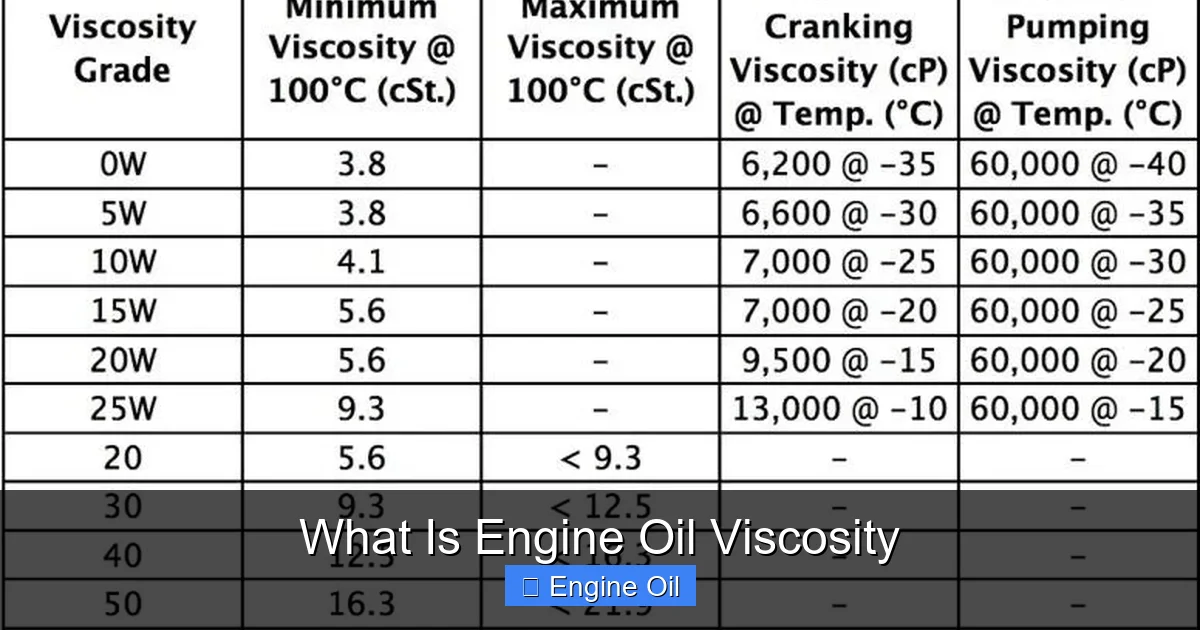
Visual guide about What Is Engine Oil Viscosity
Image source: bcl.co.za
Always check your manual before you buy. Manufacturers spend millions of dollars testing engines to see which oil viscosity allows for the best fuel economy and the longest part life. If your car calls for 0W-20, using 10W-40 because you think it is “better” will almost certainly hurt your engine’s efficiency and could even trigger a “Check Engine” light due to variable valve timing issues.
Adapting to Modern Technology
With the rise of hybrid and high-performance engines in 2026, the industry has shifted toward very thin oils, such as 0W-16 or even 0W-8. These oils are designed to reduce internal friction. By reducing friction, the engine doesn’t have to work as hard to spin.
This translates directly into better miles per gallon and fewer carbon emissions. Using the wrong viscosity in these high-tech engines is not just a bad idea; it can be catastrophic for the internal components.
The Impact of Temperature and Climate
Your local climate plays a role, but perhaps not as big a role as it did thirty years ago. Back in the day, people used to switch their oil viscosity when the seasons changed. They would run a thicker oil in the summer and a thinner oil in the winter. While this is still a valid concept, modern full-synthetic oils are so technologically advanced that they can handle a much wider temperature range.
If you live in an area that reaches extreme arctic temperatures, a 0W-X oil is highly recommended. It ensures that the oil is ready to circulate the moment you turn the key, protecting your engine during the most vulnerable seconds of the morning commute.
In contrast, if you live in a desert climate and do heavy towing, your manufacturer might suggest a slightly different oil specification to account for the sustained high heat. Always prioritize the manual, but keep your environment in mind if you have extreme driving habits.
How Heat Affects Oil Life
Heat is the enemy of oil. Over time, high temperatures cause oil to break down or “shear.” When oil shears, its viscosity changes. It often becomes thinner, losing its ability to protect parts. This is why checking your oil level and color is just as important as choosing the right viscosity. If the oil is old, the viscosity numbers on the bottle don’t mean much anymore because the fluid has chemically degraded.
Common Myths About Engine Oil Viscosity
One of the most persistent myths is that you should use thicker oil as your car gets older. People assume that because an engine has more miles, it needs “thicker” protection to fill in the gaps created by wear. This is rarely the case. If an engine is worn, it needs an overhaul, not a thicker lubricant. Adding thick oil can actually cause more damage to the bearings and the oil pump, as the pump was never designed to push that much weight.
Another myth is that all oils with the same viscosity number perform the same. This is false. A 5W-30 full synthetic oil will behave very differently than a 5W-30 conventional mineral oil. Synthetics are engineered with uniform molecule sizes, which allows them to maintain their viscosity much better under extreme stress. In 2026, the quality of the oil base matters just as much as the viscosity rating itself.
Understanding Oil Shear
Oil shear occurs when the long polymer chains in the oil are broken apart by the pressure of the engine. Think of it like cutting a long piece of spaghetti into tiny bits. Once the oil has sheared, it cannot provide the same level of protection.
High-quality synthetic oils are much more resistant to shear than older oil types. When choosing your next oil, look for the official manufacturer approvals on the back of the bottle to ensure the product can handle the specific demands of your engine.
Tips for Choosing the Right Oil
When you are ready to change your oil, follow these simple steps to make sure you get it right. First, locate the oil cap under the hood. Usually, the recommended viscosity is stamped directly onto the cap. This is the manufacturer’s way of making sure you don’t forget. If it is not there, check the manual in your glove box or use an online lookup tool specific to your make, model, and year.
Next, consider your driving style. Do you take short trips where the engine never fully warms up? Do you do a lot of “stop and go” city driving? Or do you drive long distances at highway speeds? Short trips are harder on an engine because moisture builds up inside.
Highway driving is easier on the oil because the engine stays hot and the oil circulates consistently. If your driving is severe, change your oil more frequently rather than trying to change the viscosity.
The Role of Synthetic Oils
We are living in a golden age of lubrication. Full synthetic oils offer superior viscosity stability, meaning they stay in their rated range from the moment you start the engine until you park it. They also have fewer impurities. In 2026, many car companies require full synthetic oil as a default. Do not downgrade to conventional oil just to save a few dollars; the trade-off in engine protection is simply not worth it.
Conclusion
Understanding engine oil viscosity is one of the most practical skills a car owner can possess. It removes the mystery from the auto parts store aisle and gives you confidence that you are doing the right thing for your vehicle.
Remember, the numbers on the bottle are there for a reason: they are the blueprint for your engine’s health. By sticking to the viscosity recommended by your manufacturer and choosing high-quality synthetic fluids, you can keep your engine running smoothly for years to come.
In 2026, our cars are smart enough to tell us when they need service, but they still rely on us to feed them the correct fluids. Treat your engine well, and it will return the favor with reliability, power, and efficiency. Don’t overthink the science, just respect the specs, and you will be well on your way to a long and happy relationship with your car.
Frequently Asked Questions
What do the W and the number before it represent?
The W stands for Winter and refers to how the oil performs at cold temperatures. A lower number indicates the oil stays thinner and flows faster during cold starts, protecting the engine immediately.
Does higher viscosity mean better protection for older engines?
Not necessarily, and it can often be harmful. Modern engines, regardless of age, rely on specific tolerances, and using an oil that is too thick can cause poor lubrication and engine strain.
Can I mix different oil viscosities in my engine?
It is best to avoid mixing viscosities, as it makes it impossible to know exactly how the oil will perform. In an emergency, it is better to have the wrong viscosity than no oil at all, but you should drain and replace it as soon as possible.
How often should I check my oil viscosity and levels?
You should check your oil level at least once a month. As for viscosity, it is managed by choosing the correct oil during every scheduled oil change, typically every 5,000 to 10,000 miles depending on your vehicle’s requirements.
Why is synthetic oil better for viscosity?
Synthetic oils are engineered to have more uniform molecules, which allows them to resist breaking down or “shearing” under heat. This means they maintain their viscosity rating much longer than conventional mineral-based oils.
Can I use a 5W-30 if my manual calls for 5W-20?
You should always stick to the manufacturer’s recommendation. Using a 30-weight oil when a 20-weight is specified can increase internal friction and reduce your fuel economy, as the oil is thicker than what the engine’s internal components were designed to handle.