
The best motorcycle engine oil protects your engine, supports smooth shifting, and matches your bike’s clutch and riding style.
A hard ride, a long commute, or a hot summer day can push motorcycle oil to its limit. The wrong oil may cause rough shifts, clutch slip, excess heat, or faster wear. I reviewed five popular 10W-40 motorcycle oils to find the best motorcycle engine oil for street bikes, touring, sport riding, and daily use. Each pick offers a different balance of protection, price, oil type, bottle size, and wet-clutch support. Always check your owner’s manual before changing oil, since the correct viscosity and performance rating matter more than marketing claims.
See the differences between my top picks at a glance.
| Oil | Type | Viscosity | Clutch Rating | Best For | Buy |
|---|---|---|---|---|---|
| TRIAX XTerra 4T | Full synthetic | 10W-40 | JASO MA2 | High-mileage and hard use | View on Amazon |
| Motul 7100 4T | Full synthetic | 10W-40 | JASO MA2 | Sport and premium street use | View on Amazon |
| 4T Synthetic Blend | Synthetic blend | 10W-40 | JASO MA2 | Value-focused riders | View on Amazon |
| Valvoline Full Synthetic | Full synthetic | 10W-40 | Everyday full-synthetic use | View on Amazon | |
| Valvoline 4-Stroke | Motorcycle oil | 10W-40 | Routine street riding | View on Amazon |
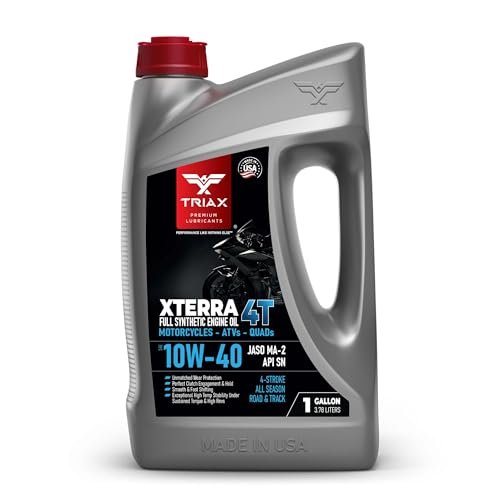
TRIAX XTerra 4T 10W-40 Full Synthetic

TRIAX XTerra 4T is a full synthetic 10W-40 oil made for four-stroke motorcycles and other powersports machines. The listing states that it exceeds JASO MA2 and API SL/SM/SN requirements. That makes it a strong match for many motorcycles with a shared engine, transmission, and wet clutch. The one-gallon size also suits riders who want oil for more than one service.
I see this oil as a practical choice for riders who put real heat and miles into their bikes. Its 10W-40 grade works across many common riding conditions, but your owner’s manual should always make the final call. The race-ready claim may appeal to aggressive riders, yet no oil removes the need for correct warm-up, clean filters, and regular changes. For frequent riders, the large container can offer useful convenience.
Pros:
- Full synthetic formula for demanding riding
- JASO MA2 rating supports wet-clutch use
- 10W-40 grade fits many four-stroke motorcycles
- One-gallon package works well for repeat service
- Listed for motorcycles, ATVs, quads, and snowmobiles
- API SL/SM/SN performance claims provide broad coverage
Cons:
- A gallon may be more oil than one motorcycle needs
- It may not suit bikes that require another viscosity
- Large packaging takes more storage space
What Amazon Buyers Are Saying
Buyer feedback for motorcycle oil often centers on smoother shifting, easy pouring, and value per change. Reviews for a product like this should be read with attention to the motorcycle model and required oil grade. Some riders may praise the large container and quiet engine feel, while others may focus on shipping, packaging, or a different viscosity need. These experiences can help, but they do not replace the manufacturer’s specification chart or your owner’s manual.
My Recommendation
I recommend TRIAX XTerra 4T to riders who want full synthetic oil in a large, practical package. It is especially appealing for frequent riding, multiple machines, or owners who prefer to keep extra oil on hand. Confirm the required JASO and API rating before purchase. I rate it highly for coverage and value, though the gallon size is less convenient for occasional riders.
| Category | Rating |
|---|---|
| Engine protection | 4.6/5 |
| Wet-clutch suitability | 4.6/5 |
| Riding versatility | 4.5/5 |
| Value per service | 4.7/5 |
| Overall rating | 4.6/5 |
Motul 7100 4T 10W-40 Full Synthetic

Motul 7100 4T is a premium full synthetic motorcycle oil with ester technology. The product listing gives it an API SP and JASO MA2 rating. That combination makes it a strong option for modern four-stroke motorcycles with a wet clutch. It is sold in a 4-liter package, which is useful when your bike’s oil capacity is close to that amount.
This oil targets riders who want a high-end product for street, sport, and adventure use. Motul also presents it as an engine and gearbox protection oil, which matters because many motorcycles share oil between these systems. The 10W-40 grade is common, but not universal. I would choose it when the manual calls for 10W-40 and the rider wants a premium synthetic formulation.
Pros:
- Full synthetic base for demanding engine conditions
- JASO MA2 rating is designed for wet-clutch motorcycles
- API SP rating reflects a modern performance category
- Ester technology supports its premium positioning
- Suitable for street, sport, and adventure motorcycles
- Four-liter size can match a complete oil service
Cons:
- Premium pricing may not fit every maintenance budget
- Four liters may be too much or too little for some bikes
- It offers no benefit if your bike requires another oil grade
What Amazon Buyers Are Saying
Customer comments on premium motorcycle oils commonly mention smooth gear changes, a quieter running engine, and confidence during spirited riding. Some buyers also value the sealed packaging and the familiar Motul name. As with all review patterns, reports can differ by motorcycle, climate, mileage, and change interval. I would treat claims about lower noise or better shifting as personal observations rather than guaranteed results.
My Recommendation
Motul 7100 4T is my premium pick for riders who want a well-known full synthetic oil with strong stated specifications. It is worth considering for sport bikes, fast street riding, and adventure use when 10W-40 is approved. The main drawback is price, not the product’s stated coverage. I rate it as an excellent choice for riders who place performance and brand confidence above the lowest cost.
| Category | Rating |
|---|---|
| Engine and gearbox protection | 4.8/5 |
| Wet-clutch suitability | 4.8/5 |
| High-load performance | 4.8/5 |
| Value for money | 4.2/5 |
| Overall rating | 4.7/5 |
4T 10W-40 Synthetic Blend Motorcycle Oil

This 4T motorcycle oil uses a synthetic blend formula in the popular 10W-40 grade. The listing states JASO MA2 and API SL performance. Those marks are important for many four-stroke motorcycles because the oil must work with a wet clutch and, in many designs, the transmission. The one-gallon package gives budget-minded riders a generous supply for planned maintenance.
A synthetic blend can make sense when you want more than a basic mineral oil but do not want the price of a premium full synthetic. It may suit normal street use, commuting, and regular service schedules. Still, I would not assume that “synthetic blend” fits every bike or riding condition. Check the manual, follow the change interval, and use the correct oil level.
Pros:
- JASO MA2 rating supports wet-clutch operation
- 10W-40 grade suits many common motorcycles
- Synthetic blend can offer a useful price balance
- One-gallon size supports several maintenance tasks
- Designed for smooth shifting and four-stroke use
- Good option for routine street riding
Cons:
- Not a full synthetic formulation
- Large container may be inconvenient for one-bike owners
- API SL is an older category than API SP
What Amazon Buyers Are Saying
Value-focused buyers often look for clean pouring, a fair price, and normal shifting after an oil change. Reviews may also mention how much oil the package provides and whether the container arrives intact. Some riders may prefer a full synthetic for track days, extreme heat, or very long intervals. Since customer results depend on the motorcycle and service routine, I would use reviews to judge convenience and value, not to replace the manufacturer’s oil recommendation.
My Recommendation
I recommend this synthetic blend to riders who want a sensible maintenance oil at a potentially lower cost. It is a good fit for routine road use when the motorcycle manual allows 10W-40 and the stated JASO MA2 rating matches the bike. It is less compelling for riders who demand a full synthetic. My rating reflects strong value and useful clutch coverage.
| Category | Rating |
|---|---|
| Daily engine protection | 4.2/5 |
| Wet-clutch suitability | 4.5/5 |
| Riding range | 4.1/5 |
| Value per service | 4.7/5 |
| Overall rating | 4.4/5 |
Valvoline 4-Stroke Full Synthetic 10W-40

Valvoline 4-Stroke Full Synthetic 10W-40 is made for four-stroke motorcycle engines. Its quart bottle gives riders a simple way to buy the amount needed for a single top-off or service. Full synthetic oil generally offers stable performance across a broad temperature range, but the right grade still depends on the motorcycle maker.
This product stands out for riders who prefer a recognizable automotive lubricant brand in a motorcycle-specific formula. The smaller bottle is easy to store and easy to measure. It may be a good everyday choice for a street bike, commuter motorcycle, or light touring machine that calls for 10W-40. Before purchase, confirm the label and manual requirements for wet-clutch use.
Pros:
- Full synthetic formula for regular motorcycle service
- Common 10W-40 viscosity
- One-quart bottle is easy to store
- Useful for topping off or buying multiple quarts
- Made for four-stroke motorcycle engines
- Recognized Valvoline brand support
Cons:
- Several bottles may be needed for a full oil change
- Quart packaging may cost more per service than a bulk gallon
- Riders must verify clutch and performance requirements on the label
What Amazon Buyers Are Saying
Buyers of single-quart motorcycle oils often value the easy-to-handle bottle and the ability to purchase only what they need. Common review themes for this type of product include smooth operation, convenient shipping, and trust in the brand. Some buyers may report that they needed more quarts than expected, so checking the motorcycle’s oil capacity is important. Review comments about engine sound or shifting should be viewed as model-specific experiences.
My Recommendation
This Valvoline full synthetic is worth considering for riders who want a convenient quart-size option from an established brand. It makes the most sense when the bike needs 10W-40 and the required motorcycle oil standards match the product label. It is not the best bulk-value choice, but it is practical for storage and small purchases. I give it a strong rating for convenience and everyday use.
| Category | Rating |
|---|---|
| Synthetic oil quality | 4.5/5 |
| Daily riding suitability | 4.4/5 |
| Storage convenience | 4.7/5 |
| Cost efficiency | 4.0/5 |
| Overall rating | 4.4/5 |
Valvoline 4-Stroke Motorcycle 10W-40

Valvoline 4-Stroke Motorcycle 10W-40 is a straightforward motorcycle oil for four-stroke engines. It comes in a one-quart bottle, so it works well for riders who want manageable storage and simple purchase quantities. The 10W-40 grade is widely used, but a rider should never select oil by viscosity alone.
This product is aimed at normal motorcycle maintenance rather than a large-volume service plan. It may suit commuting, weekend rides, and routine street use when the motorcycle manufacturer approves the grade and oil type. The bottle size also makes it useful as spare oil for a planned trip. I would compare its required performance marks with the manual before placing an order.
Pros:
- Designed for four-stroke motorcycle engines
- Common 10W-40 viscosity
- Compact quart bottle stores easily
- Useful for routine street maintenance
- Easy to buy in the amount needed for top-offs
- Backed by a familiar lubricant brand
Cons:
- Full service may require several bottles
- May provide less value than bulk packaging
- It may not fit motorcycles that need a different viscosity or rating
What Amazon Buyers Are Saying
Reviews for this kind of motorcycle oil often focus on convenient bottle size, fair pricing, and normal performance after an oil change. Some buyers may like using a known brand for basic maintenance. Others may point out that a quart does not cover the full capacity of larger engines. I recommend checking the exact oil capacity and reading recent listing details before ordering, since packaging and seller information can change.
My Recommendation
I would choose this Valvoline oil for routine riding when its label matches the bike’s manual. It is a practical option for a small motorcycle, a top-off, or a rider who prefers quart bottles. It does not offer the bulk savings of a gallon or the premium positioning of a full synthetic oil. For simple maintenance, I rate it as a dependable value pick.
| Category | Rating |
|---|---|
| Routine protection | 4.2/5 |
| Everyday suitability | 4.3/5 |
| Bottle convenience | 4.6/5 |
| Value for money | 4.1/5 |
| Overall rating | 4.3/5 |
How to Choose the Best Motorcycle Engine Oil
Choosing the best motorcycle engine oil starts with your owner’s manual. The oil must match the required viscosity, performance level, and clutch needs. A premium oil is not automatically right for every engine. I use the following checks before buying any motorcycle lubricant.
1. Match the Viscosity to Your Motorcycle
Viscosity describes how oil flows at different temperatures. In 10W-40, the “10W” relates to cold flow, while “40” describes the oil’s thickness at operating heat. This does not mean every motorcycle needs 10W-40. Some engines call for 10W-30, 15W-50, or another grade.
Start with the temperature chart in the owner’s manual. A rider in a cold climate may need a different cold-flow grade than a rider in a hot climate. Do not switch grades just because one oil has better online reviews. Correct viscosity helps the engine, gearbox, and clutch work as designed.
2. Check JASO MA or MA2 for a Wet Clutch
Many motorcycles use a wet clutch. The clutch sits in the same oil as the engine and transmission. Car oils may contain friction modifiers that can make a motorcycle clutch slip. That is why motorcycle-specific ratings matter.
JASO MA and MA2 are key labels for many wet-clutch bikes. MA2 is often chosen when the manual allows it because it indicates a higher friction performance range within the JASO motorcycle standard. Always check the exact wording in your manual. A scooter with a dry clutch may have different needs, and a two-stroke engine requires a different oil system.
3. Compare Full Synthetic, Blend, and Conventional Value
Full synthetic oil usually offers strong resistance to heat and oxidation. It can be a smart choice for high-revving engines, long trips, hot weather, and riders who demand stable performance. Motul 7100 and TRIAX XTerra are the full synthetic choices in this review.
A synthetic blend can lower cost while offering a step up from basic mineral oil. The 4T synthetic blend is aimed at riders who want value for routine use. The best motorcycle engine oil for a commuter may not be the same as the best oil for a track-focused bike.
Conventional motorcycle oil can still be suitable when the manufacturer approves it and the rider follows the service interval. The oil type matters, but maintenance matters just as much. Change oil on time, replace the filter when required, check the level on a level surface, and fix leaks quickly.
4. Consider the Engine, Gearbox, and Riding Load
Motorcycle oil often protects more than the engine. In many bikes, it also lubricates the gearbox and wet clutch. That creates more shear stress than a typical car engine may place on its oil. Hard acceleration, high rpm, heavy luggage, stop-and-go traffic, and hot weather can add load.
Sport and adventure riders may prefer a full synthetic oil with a strong motorcycle specification. A commuter may value clean shifts and a reasonable cost. A rider with several powersports machines may benefit from a gallon package. Think about the bike, not only the brand name.
5. Buy the Right Quantity and Store It Well
Check the exact oil capacity before you order. Some engines need less than a quart, while larger engines need several quarts. A gallon can be cost-effective, but it may leave opened oil in storage. Quart bottles are easier to handle and can reduce waste when you need a small amount.
Keep unused oil sealed in a cool, dry place. Do not pour used oil into soil, drains, or trash. Take it to an approved recycling point or service center. Good storage and safe disposal protect both the lubricant and the environment.
6. Treat Product Claims With Care
Words such as “race ready,” “maximum protection,” and “all season” describe marketing positions. They do not override the specifications in your motorcycle manual. Look for clear viscosity information and recognized performance ratings. Then compare bottle size, seller reputation, price, and the date of the listing.
Customer reviews can reveal useful details about packaging, pouring, and delivery. They cannot prove that one oil works best in every motorcycle. Engine design, clutch type, climate, service interval, and riding style all affect results. I give the most weight to the manual and the oil’s stated specification.
Final Verdict: Which Should You Buy?
Motul 7100 is my premium pick, while TRIAX XTerra offers excellent full-synthetic value in a large package. For most riders, the best motorcycle engine oil is the one that matches the manual, supports the clutch, and fits the riding conditions.
Choose the synthetic blend for budget service, or Valvoline for easy quart-size buying. Check the grade before ordering, change oil on schedule, and use a new filter when required.
FAQs Of best motorcycle engine oil
What is the best motorcycle engine oil for most bikes?
Motul 7100 and TRIAX XTerra are strong choices when your manual allows 10W-40 and JASO MA2 oil. The manual should decide the final match.
Is 10W-40 oil suitable for every motorcycle?
No. Many motorcycles use 10W-40, but some require another viscosity. Check the owner’s manual and temperature chart before buying.
Is JASO MA2 safe for a wet clutch?
JASO MA2 is designed for many wet-clutch motorcycles. Confirm that your bike requires or allows this rating before use.
Should I choose full synthetic or synthetic blend motorcycle oil?
Full synthetic suits riders who want strong heat stability and high-load performance. A synthetic blend can offer good routine protection at a lower cost.
Can I use car oil in my motorcycle?
Do not assume car oil is safe. Some car oils contain friction modifiers that may cause wet-clutch slip. Use motorcycle oil that matches the manual.
How often should I change motorcycle engine oil?
Follow the interval in your owner’s manual. Severe heat, heavy traffic, racing, dust, or frequent short trips may require more frequent service.