
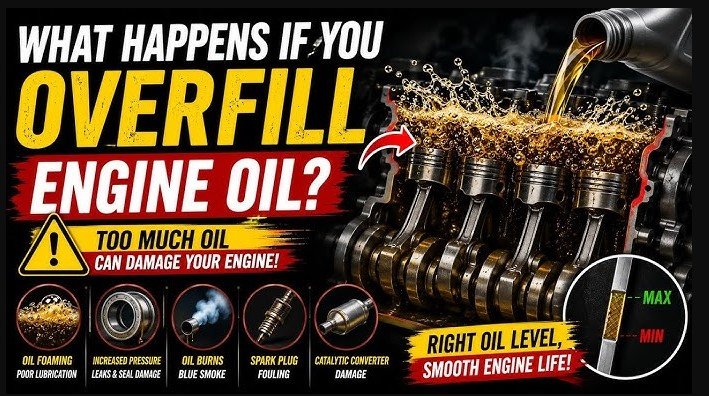
Overfilling your engine with oil is a common mistake that can lead to serious mechanical damage, including foamy oil, gasket leaks, and ruined catalytic converters. Always stick to your manufacturer’s recommended oil capacity to keep your engine running smoothly and avoid costly repairs.
We have all been there. You are standing in your garage on a Sunday afternoon, trying to be a responsible car owner. You pop the hood, grab the funnel, and start pouring in fresh oil. Maybe you were distracted, or maybe you just did not check the manual.
Suddenly, you realize you have poured in way more than you should have. You might be asking yourself, “What will happen if you overfill your engine with oil?” It is a question that pops up more often than you would think in 2026.
Most people assume that “more oil” means “better protection.” It is a logical thought, but unfortunately, it is entirely wrong. Your engine is a finely tuned machine designed to hold a very specific amount of lubricant.
Adding extra oil does not add extra protection; instead, it turns a simple maintenance task into a potential nightmare for your internal components. Let us dive into why keeping that oil level perfect is so important for your car’s longevity.
Key Takeaways
- Foaming Issues: Excess oil causes the crankshaft to whip the lubricant into a foam, preventing it from properly lubricating critical engine parts.
- Pressure Spikes: Too much oil increases internal crankcase pressure, which can force oil past seals and gaskets, leading to messy leaks.
- Catalytic Converter Damage: If oil blows past the piston rings, it enters the exhaust system, which can permanently clog or destroy your expensive catalytic converter.
- Reduced Performance: The extra fluid creates aerodynamic drag on the crankshaft, which robs your vehicle of power and lowers fuel efficiency.
- Check the Dipstick: Always check your oil level on level ground after the engine has cooled to get an accurate reading and avoid accidental overfilling.
- Professional Help: If you have significantly overfilled your engine, it is safer to drain the excess or have a mechanic do it rather than driving the vehicle.
The Science Behind Oil Capacity
To understand why overfilling is bad, we first need to look at how your engine uses oil. Your engine oil does not just sit in a pool at the bottom of the pan. It is constantly being picked up by the oil pump and circulated through tiny passages to keep metal parts from grinding against each other. The oil pan is designed with a specific volume in mind to allow the pump to draw fluid effectively without interference.
The Role of the Crankshaft
Inside your engine, the crankshaft spins at high speeds. When you overfill the oil, the level rises high enough that the crankshaft can actually touch the surface of the oil pool. Imagine trying to run through a swimming pool; you are going to create a massive splash. When the crankshaft hits the oil, it churns it violently. This process is called aeration.
Why Aeration is a Serious Problem
Aeration creates tiny air bubbles in the oil, essentially turning it into a light foam. Think about the texture of whipped cream compared to milk. This foam is not an effective lubricant. Because the oil pump is designed to move liquid, not air, it struggles to circulate this foamy mixture. When your engine parts receive foamy oil instead of solid lubricant, they do not get the protection they need. This leads to increased friction, heat, and eventually, catastrophic engine failure.
Pressure and Seal Failure
One of the most immediate symptoms of an overfilled engine is increased internal pressure. Engines are built with vents called PCV valves that allow gases to escape. However, these systems have limits. When there is too much oil, the space available for gases to move around becomes restricted. This causes the pressure inside the crankcase to spike significantly.
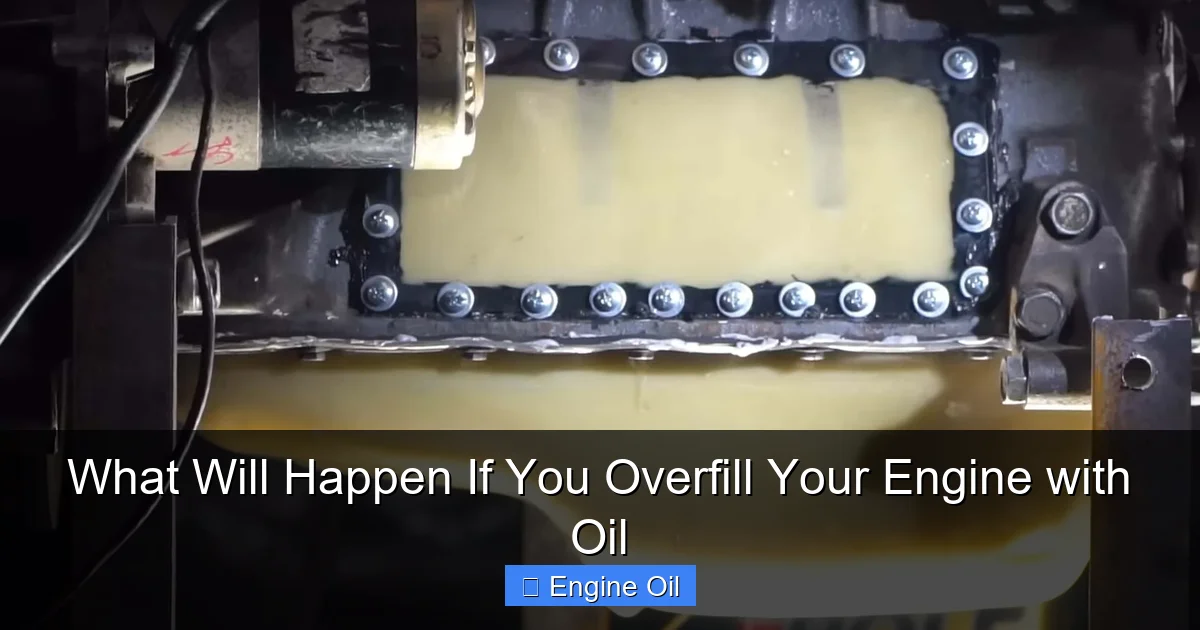
Visual guide about What Will Happen If You Overfill Your Engine with Oil
Image source: cdn.motor1.com
The Weakest Link: Gaskets and Seals
Your engine is held together by various gaskets and rubber seals designed to keep oil inside. When the internal pressure climbs too high, it looks for a way out. This usually means it will force oil through these seals. You might start seeing oil spots on your driveway or notice a burning smell as oil leaks onto hot engine parts. Replacing a main seal is a labor-intensive job that costs much more than the oil you were trying to save.
Oil Consumption and Burning
Sometimes, the extra pressure forces oil past the piston rings and into the combustion chamber. Once oil is inside the chamber, it gets burned along with your fuel. You might notice thick, blueish smoke coming out of your exhaust pipe. Not only does this pollute the air, but it also creates carbon deposits on your spark plugs and valves, which will eventually make your engine run rough or fail to start.
Damaging Your Exhaust System
If you think a bit of oil burning is no big deal, you need to consider the health of your catalytic converter. Modern vehicles in 2026 are equipped with complex emissions systems designed to scrub your exhaust. A catalytic converter is a very expensive component, often costing thousands of dollars to replace.
Oil Contamination
When oil is burned in the engine, it creates residue that passes through the exhaust system. This residue coats the delicate internal mesh of the catalytic converter. Once this mesh is clogged or “poisoned” by oil residue, the converter can no longer do its job. A failed catalytic converter will trigger your “Check Engine” light, cause you to fail emissions testing, and severely limit your engine’s power output.
Performance and Fuel Efficiency
Beyond the potential for broken parts, overfilling your engine with oil affects how your car feels on the road. You might not notice it instantly, but there is a performance penalty for that extra fluid. As we mentioned earlier, the crankshaft hitting the oil creates a drag effect. This is essentially like trying to pedal a bicycle through thick mud.
The Drag Effect
Every bit of energy the engine uses to fight the extra oil resistance is energy that is not going toward moving your car. You might notice that your vehicle feels more sluggish or takes longer to accelerate.
Furthermore, because your engine is working harder to overcome this resistance, you will likely see a dip in your fuel efficiency. In an era where fuel costs remain a concern, burning extra gas because you overfilled your oil is just a waste of money.
Operating Temperature
Foamy, aerated oil is a poor conductor of heat. While oil is supposed to help cool your engine components, foam does not dissipate heat well. As the oil temperature rises, the oil breaks down faster.
This creates a cycle where your engine runs hotter, the oil loses its lubricating properties, and parts wear out at an accelerated rate. You might find your temperature gauge creeping up into the danger zone during long drives.
What to Do If You Overfilled Your Engine?
So, you have checked the dipstick, and it is definitely too high. What now? Do not panic. The first thing you should do is stop driving the car. Even a short trip to the grocery store could lead to seal damage if the oil level is significantly high. There are a few practical ways to fix this situation before it turns into an expensive headache.
The “Drain and Refill” Method
The safest way to correct an overfill is to drain the excess oil. If you have the tools, you can slide under the car, place a drain pan under the oil plug, and loosen it just enough to let a little bit of oil drip out. This is a bit messy and requires caution, as you do not want to lose all your new oil. Tighten the plug back up, check the dipstick, and repeat until the level is right in the “safe” zone.
Using a Suction Tool
For those who want a cleaner approach, you can buy a simple hand-operated oil extraction pump. You can slide a thin tube down the dipstick hole and suck the extra oil out directly from the top of the engine. This is often easier than getting under the vehicle and is a great tool to keep in your garage for quick adjustments.
When to Call a Pro
If you are not comfortable working with tools or if you suspect you have overfilled the engine by a large amount (like adding an extra gallon), call a professional mechanic. It is much cheaper to pay for a quick fluid change than it is to replace a blown engine seal. Do not risk your car’s health just to avoid a trip to the shop.
Conclusion
When asking “what will happen if you overfill your engine with oil,” it is clear that the answer is rarely good. From the immediate risk of damaging seals and gaskets to the long-term threat of destroying your catalytic converter and reducing fuel efficiency, the consequences are simply not worth the risk.
Your car’s manufacturer spent thousands of hours engineering the engine to work with a specific amount of oil. Respecting those guidelines is the easiest way to ensure your vehicle stays reliable for years to come. Always double-check your owner’s manual for the exact capacity, and remember that checking your oil level should always be done on a flat surface after the engine has cooled for a few minutes.
By taking these small, careful steps, you save yourself the stress, time, and money that come with avoidable mechanical failures. Keep your oil levels precise, and your engine will reward you with miles of smooth driving.
Frequently Asked Questions
Is it okay to be slightly over the “Full” line on the dipstick?
If the oil is just a tiny bit above the mark maybe a millimeter or two – it is usually not a cause for immediate alarm. However, if it is significantly above the line, you should drain the excess to prevent pressure buildup and foaming.
Does overfilling oil make the engine louder?
Yes, in some cases, the extra oil causing drag on the crankshaft or improper lubrication can lead to increased engine noise. If you hear new ticking or grinding sounds after an oil change, check your oil level immediately.
Can overfilling oil cause the car to stall?
While rare, excessive overfilling can cause enough internal resistance and damage that the engine struggles to maintain an idle. If you have significantly overfilled the oil and the car is stalling, stop driving and have it inspected.
How much oil is “too much”?
Generally, being more than half a quart over the recommended capacity is enough to cause concern. Any amount that causes the crankshaft to dip into the oil pool is considered potentially harmful.
Will the engine “burn off” the extra oil on its own?
No, your engine is not designed to burn off excess oil. While it might consume some, it will likely cause damage to the catalytic converter and spark plugs in the process before it ever reaches a safe level.
How often should I check my oil level?
It is a good habit to check your oil level every few weeks or before long road trips. This helps you catch leaks or consumption issues before they become major engine problems.